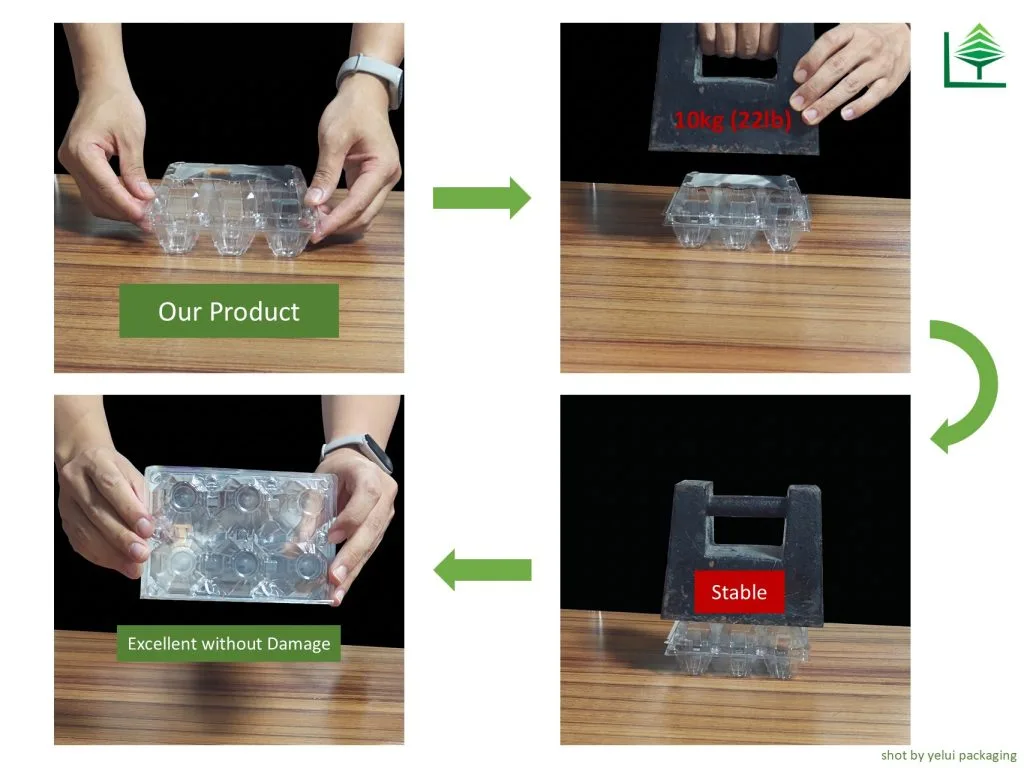
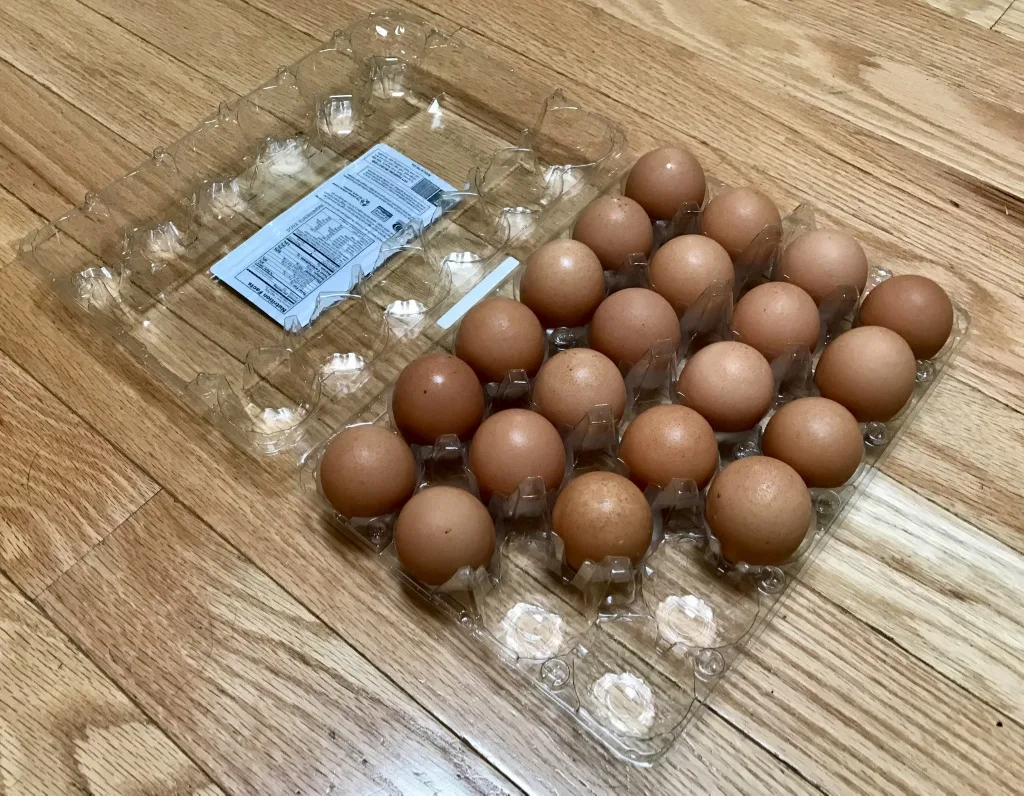
A finished egg pack carries two conversations at once. The front speaks to a shopper in a hurry, and the back panel or the inside of the lid answers to an inspector with a checklist. Buyers who come to us for clear PET trays usually arrive with careful drawings of the cavities and far less certainty about the flat space where the law lives. That flat space decides whether the pack can be sold at all, so it deserves the same engineering attention as the cells.
What European law asks for on the outer surface
The marketing standards for hen eggs in the European Union now sit in Commission Delegated Regulation (EU) 2023/2465, which repealed the long standing Regulation (EC) No 589/2008 and carried its labelling duties forward. A pack of Class A eggs must show, on the outer surface and in easily visible and clearly legible type: the packing centre code, the quality grading, the weight grading, the date of minimum durability, and an advice to keep eggs chilled after purchase. Washed eggs must be marked as washed, and the meaning of the producer code stamped on the shells must be explained on or inside the pack.
The weight grades are fixed. XL means an egg of 73 g or more, L runs from 63 g, M from 53 g, and S covers everything below 53 g. A pack that mixes sizes must state the minimum net weight in grams together with the words eggs of different sizes. Class A eggs must be graded, marked and packed within 10 days of laying, and the date of minimum durability may be no more than 28 days after laying. The term extra or extra fresh is a special case: it may appear only until the ninth day after laying, and only where the laying date and the nine day limit are shown on the pack.
The producer code and the story a shopper can read
Every Class A shell carries a stamped code, printed in food grade ink at a height of at least 2 mm. The first digit gives the farming method: 0 for organic, 1 for free range, 2 for barn and 3 for eggs from caged hens. Two letters identify the country, and the remaining characters identify the registered farm. Because the meaning of that code must be explained on or inside the pack, almost every European egg carton carries a small key, and the key needs its own space in the layout. These marketing standards apply to eggs of the hen, so quail and pigeon packs are governed by general food information law instead, as we explained in our guide to quail egg packaging.
What the United States asks for instead
The American system does not impose the same quality and weight grading by law. What it does impose, under 21 CFR 101.17, is a safe handling statement on shell eggs that have not been treated to destroy Salmonella. The wording is prescribed, the statement must appear in a hairline box with the words SAFE HANDLING INSTRUCTIONS in bold capital letters, and the type must be no smaller than one sixteenth of an inch. Placement is flexible: the principal display panel, the information panel beside it, or the inside of the lid. If the statement goes inside the lid, the words Keep Refrigerated must appear on the principal display panel or the information panel. Retailers, for their part, must store and display shell eggs at an ambient temperature of 45 F or cooler.
Where all of this goes on a clear PET pack
Transparency changes the label logic. The eggs are the artwork, which is why brands choose clear material in the first place, so a label that covers the view defeats the purpose. In practice three positions work well. A label carried inside the lid keeps the shell line completely open and is the pattern most hinged American cartons follow. A base sticker holds the dense legal block out of sight while the lid stays clean. A sleeve around a plain tray gives the largest printable canvas, at the cost of hiding the product unless the sleeve window is cut. Our earlier article on the EU packaging rules for clear PET trays covers how these decoration choices affect recyclability targets.
Two technical points matter as much as placement. First, the adhesive and the ink must suit food contact and the temperature range the pack will see, because a chilled pack moving into a warm loading bay sweats, and the wrong adhesive lets the label slide. Second, the date coding zone needs a surface that accepts inkjet reliably; a very thin ribbed lid is a poor print bed, so leave a flat land for the coder.
An ordering checklist for label friendly trays
- Decide the market first, because the EU block, the US statement and national extras occupy different amounts of space.
- Reserve the label area at the drawing stage, together with a flat zone for date coding, before the tooling is cut.
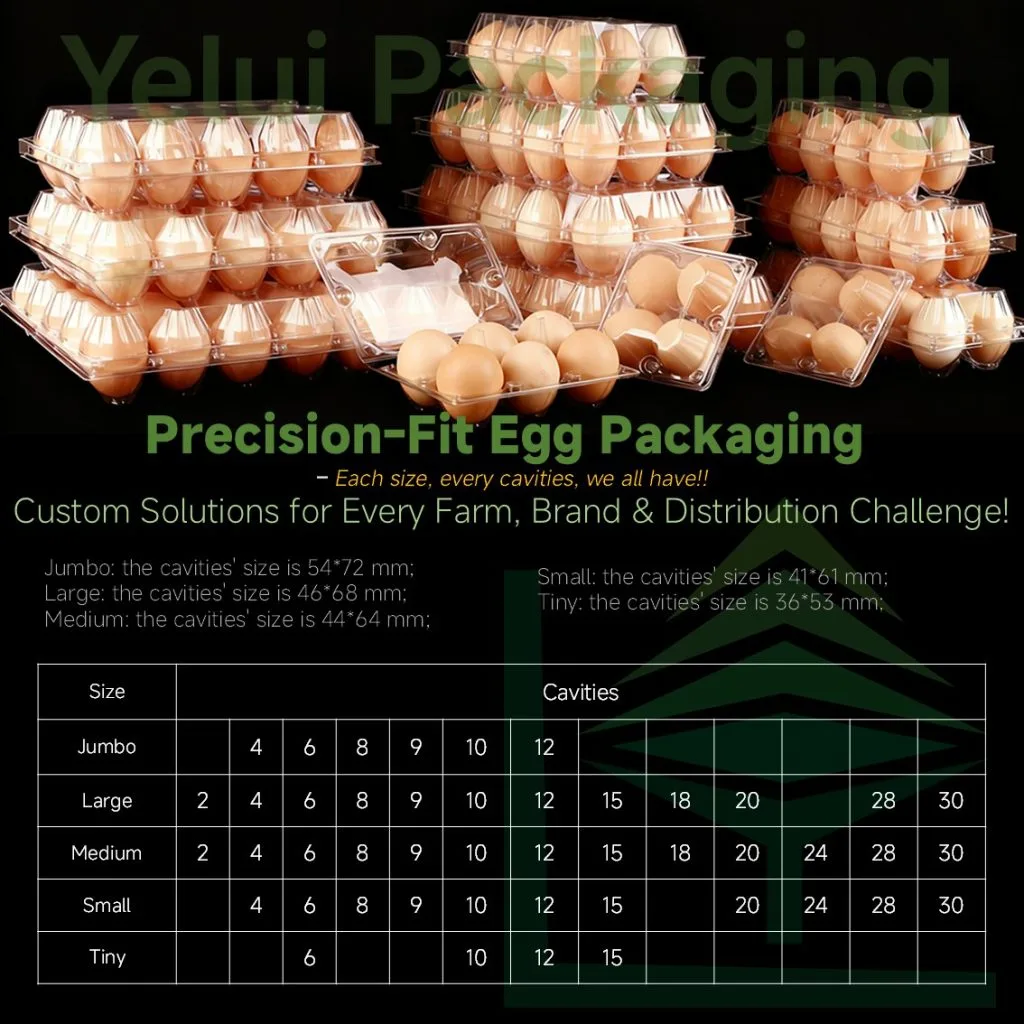
- Match the printed count and weight grade to the cavity count and the egg size the cells actually hold.
- Ask the tray supplier for a food contact declaration and confirm the label adhesive with the label printer.
- Test the finished labelled pack through a cold to warm cycle before the first production order.
- Keep artwork versioned per market, because one compliant layout rarely serves every destination.
Quick answers
What must be printed on an egg carton in the EU?
The outer surface must carry the packing centre code, the Class A grading, the weight grade, the best before date of no more than 28 days after laying, and an advice to keep the eggs chilled after purchase. The farming method must appear as well, and the meaning of the shell code must be explained on or inside the pack.
Can the US safe handling statement go inside the lid?
Yes. The statement may sit on the principal display panel, on the information panel, or inside the lid of the carton. When it is placed inside the lid, the words Keep Refrigerated must appear on the principal display panel or the information panel instead.
Can artwork be printed directly on clear PET egg trays?
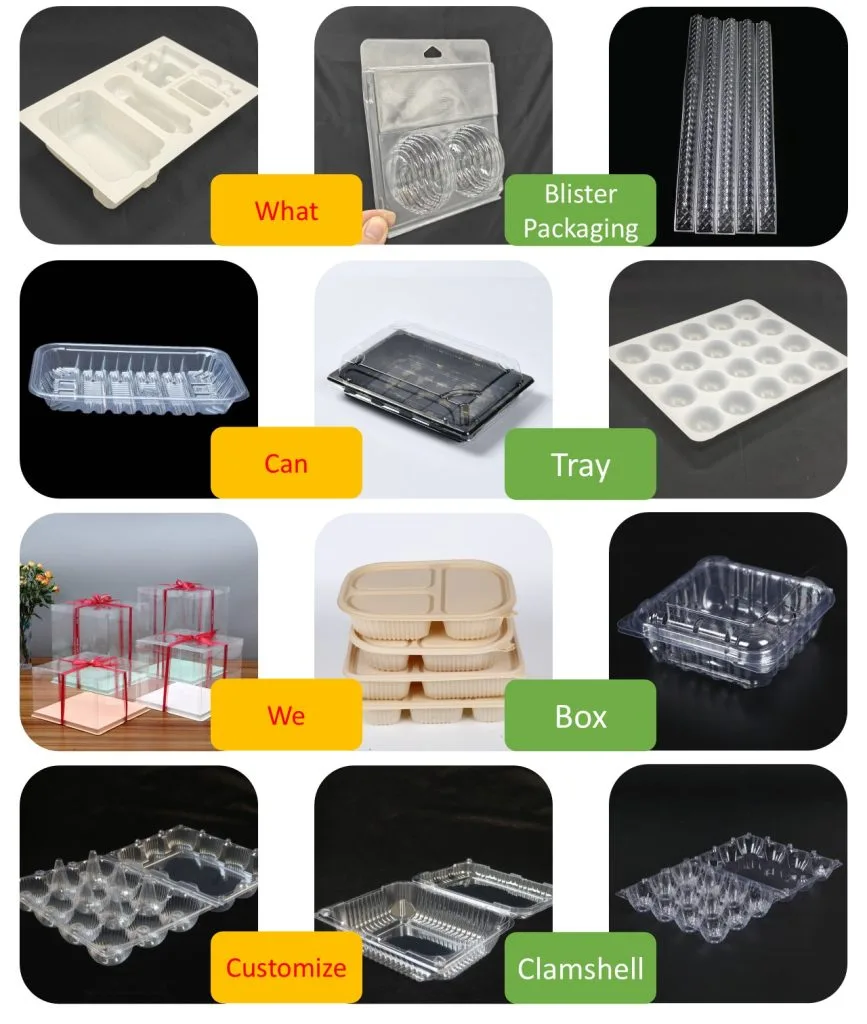
Direct printing on thin thermoformed PET is possible but rarely the best route, because the sheet is flexible and the ink sits on a curved, moving surface. Most brands get a better result from a label inside the lid, a base sticker or a sleeve. The basics of the material and the process are covered in our introduction to blister packaging, and common buyer questions are collected in our egg packaging FAQ.
A compliant pack is mostly a planning problem. Decide the market, reserve the legal space beside the view of the eggs, and put the adhesives and the coding zone in the specification instead of leaving them for the last week before a launch. The tray itself then does what clear PET does best: it sells the eggs while the paperwork stays quietly in order. Send us your market, the pack count and the grade, and we will propose a cavity and a label layout that fit both.
Kevin Zhao writes about export practice and packaging compliance for the Yelui Packaging team. Featured photo: Wikimedia Commons, CC BY SA 4.0.