Walk down the egg aisle of any modern supermarket and you will see two packaging worlds sitting side by side. One is soft grey fiber: the molded pulp carton that has carried eggs for close to a century. The other is crystal clear plastic, usually PET, that lets every egg show through the lid. Industry forecasts put the global egg packaging market at around USD 9 billion in 2026, growing at roughly 6 percent a year, and much of that growth sits in modern retail, where packaging has to sell the product, not just carry it.
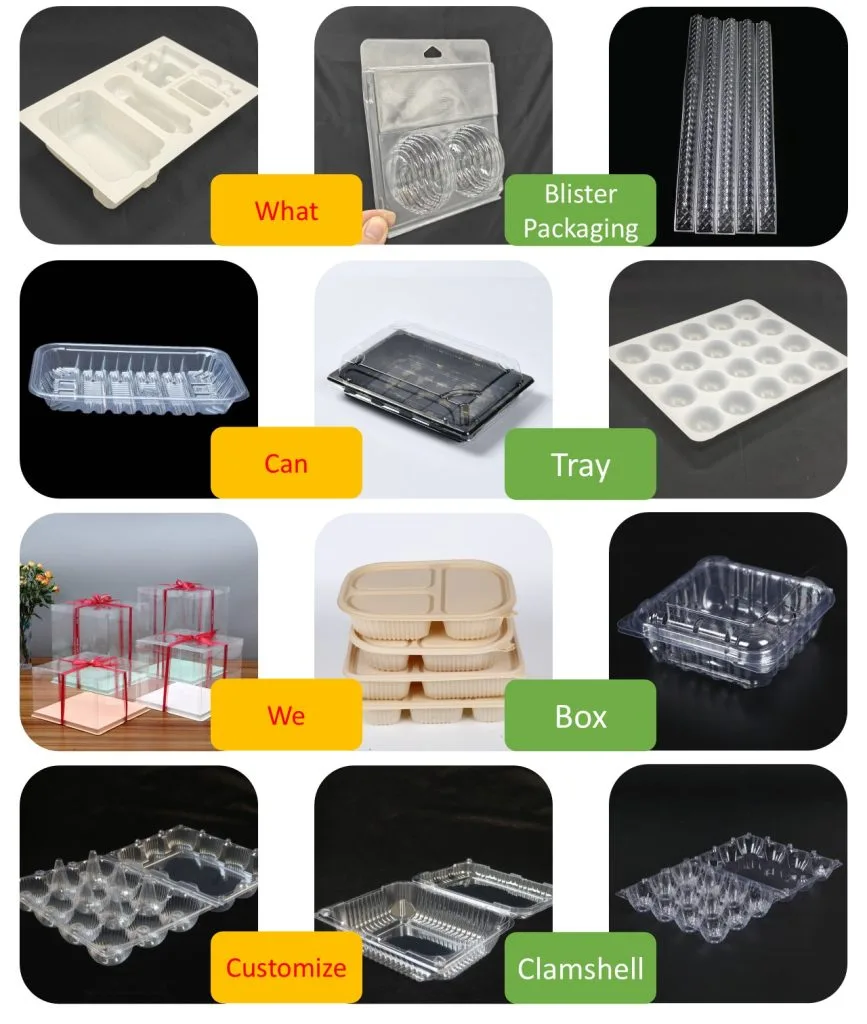
So which carton should your brand choose? We run a blister packaging factory in Dongguan, China, and we ship clear PET egg trays to farms, distributors and retail brands on several continents. Here is how the choice looks from where we sit, including the trends that filled industry discussions this year, from the new EU packaging law to the quiet rise of the quail egg snack.
Shelf visibility sells the egg
Shoppers cannot judge an egg by its carton, so they judge by what they can see. A clear PET egg carton puts the product in front of the buyer: shell color, size uniformity, cleanliness and the speckled charm of quail eggs. For premium lines such as omega enriched, free range, pastured or naturally colored eggs, visibility is the cheapest advertising the category has. Retail buyers know this. When a brand switches from fiber to clear plastic egg cartons, the usual report back is stronger shelf appeal and fewer surprised customers, because shoppers can confirm quality before they commit.
The EU packaging law just reset the rules for plastic
If you sell into Europe, 2026 is a milestone year. The EU Packaging and Packaging Waste Regulation (PPWR) applies from 12 August 2026, and it reshapes what food packaging may look like over the next decade. Three points matter for egg brands. First, from 1 January 2030 every package placed on the EU market must be designed for recycling and reach recyclability grade C or better, which effectively rules out mixed materials and hard to recycle composites. Second, contact sensitive PET packaging, the category clear egg cartons fall into, must contain at least 30 percent post consumer recycled content by 2030. Third, strict limits on PFAS in food contact packaging apply from August 2026.
The practical takeaway: single material PET is plastic resin code 1, one of the most widely recycled food plastics, and rPET egg cartons are moving from niche to mainstream. When you qualify suppliers, ask two questions: can you supply food contact compliant rPET, and can you document recyclability? A supplier who cannot will become a liability in Europe within a few years.
Humid climates and long export lanes favor PET
Molded pulp is an excellent material in dry, short supply chains. Fiber, however, loses stiffness as it absorbs moisture, which is why market researchers keep observing that retailers in humid regions resist pulp formats. Eggs are heavy for their size, cartons stack high in warehouses and containers, and a carton that softens in transit becomes a claims file. PET holds its rigidity through monsoon season, through three weeks on the water and through cold chain condensation, then nests flat for efficient shipping. For export lanes out of Asia, the Gulf, Southeast Asia and much of Latin America, this is often the deciding factor.
Quail eggs became a category of their own
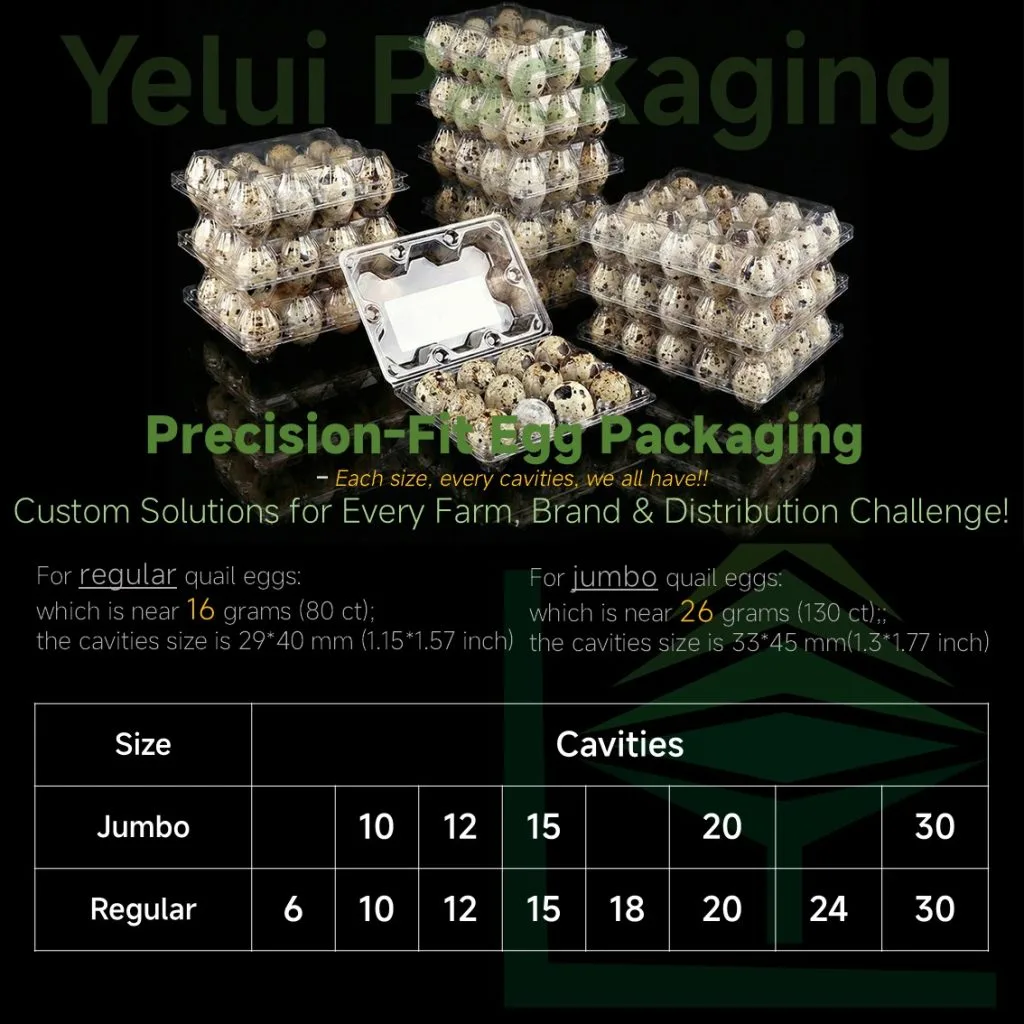
The fastest moving niche we serve is quail. High protein snacking turned quail eggs from a farm curiosity into a retail segment, led by ready to eat snack packs in East Asia and spreading through specialty retail elsewhere. Quail eggs are small and beautiful, and they look premium under a clear lid. They are also unforgiving about cavity fit: a regular quail egg weighs about 16 grams while a jumbo runs closer to 26 grams, so a tray designed for one will crack or rattle the other. Serious quail brands buy by cavity dimension, not just cavity count, and our quail egg packaging range covers both egg sizes from 6 to 30 cavities.
Where molded pulp still wins
Fairness matters in this debate, and pulp is not going away. It is usually cheaper at high volume, it carries a natural fiber image that fits rustic and farm positioning, it is accepted by nearly every curbside recycling stream, and European retailer mandates keep pushing fiber formats. Pulp also cushions well through compression. If your brand story is sustainability first and your lanes are dry and short, molded pulp egg cartons remain a sound choice. Many brands we talk to end up running both materials: fiber for the value line, clear PET for the premium line.
A buyer checklist before you order either one
Whatever material you pick, the questions that separate a professional carton from a cheap one are the same.
- Food contact compliance first. Ask for food contact declarations under FDA and EU frameworks before samples, not after purchase orders.
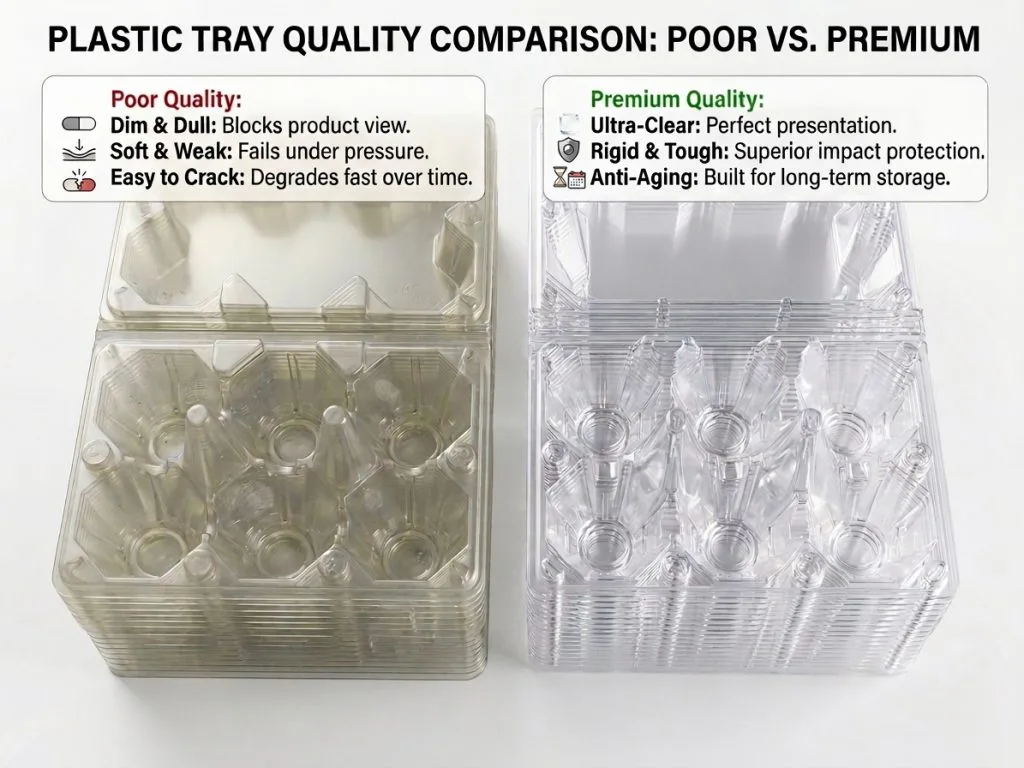
- Clarity that lasts. Recycled content is coming, but cheap mixed scrap turns dim and yellow and grows brittle with age. Premium clear PET stays glass clear through long storage.
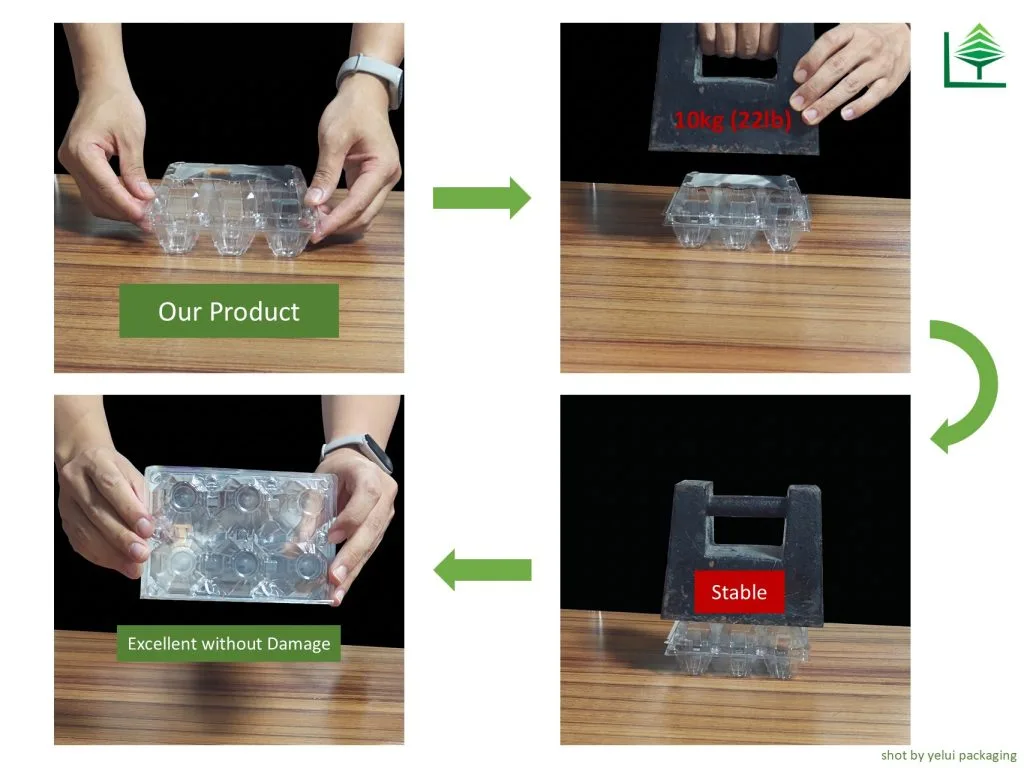
- Stack strength that was actually tested. Eggs are heavy for their size and cartons stack. We load test a single 6 cavity quail tray with 10 kg and publish the result. Ask any supplier how they test, not just whether they do.
- Cavity fit for your exact egg. Match the cavity to egg weight and size, from 16 gram regular quail to 26 gram jumbo and 65 to 75 gram chicken eggs, then pack samples with your own eggs before the bulk order.
- Logistics arithmetic. Nesting height, pieces per carton and carton dimensions decide your freight cost. Our Q12 quail tray, for example, packs 1,200 pieces per carton.
- MOQ and lead time honesty. Stocked designs should ship in small quantities fast, while custom tooling takes real time: our stocked SKUs run a 3 carton MOQ with 1 to 2 week dispatch, custom molds 10,000 pieces in 3 to 4 weeks. Treat far shorter custom promises with suspicion.
Quick answers
Are clear PET egg cartons recyclable?
Yes. PET is resin code 1 and among the most widely recycled food plastics, and clear single material designs are the easiest for recyclers to process. With rPET content requirements arriving in major markets, the recycling loop around PET egg packaging keeps tightening.
Do clear PET cartons protect eggs as well as pulp?
When the cavity is engineered for the egg, yes. Protection comes from cavity geometry, wall thickness and rigidity, not from the material alone. Pulp cushions through compression, PET through rigidity and precise fit, and both are proven in commercial distribution.
What is the MOQ for wholesale clear egg cartons?
For stocked designs, low. Our stocked chicken and quail trays start at 3 cartons, about 3,600 pieces for a 12 cavity quail model, and ship in 1 to 2 weeks. Fully custom designs start at 10,000 pieces with a 3 to 4 week production window. More detail sits in our blister and egg packaging FAQ.
A packaging switch is cheaper than a relaunch, so it is worth getting right the first time. Browse the full product catalog, or send an inquiry and tell us your egg size, your market and your shipping lane. We will recommend a tray, pack samples with your own eggs, and let the shelf decide.
Grace Lin covers export packaging and retail trends for the Yelui Packaging team.