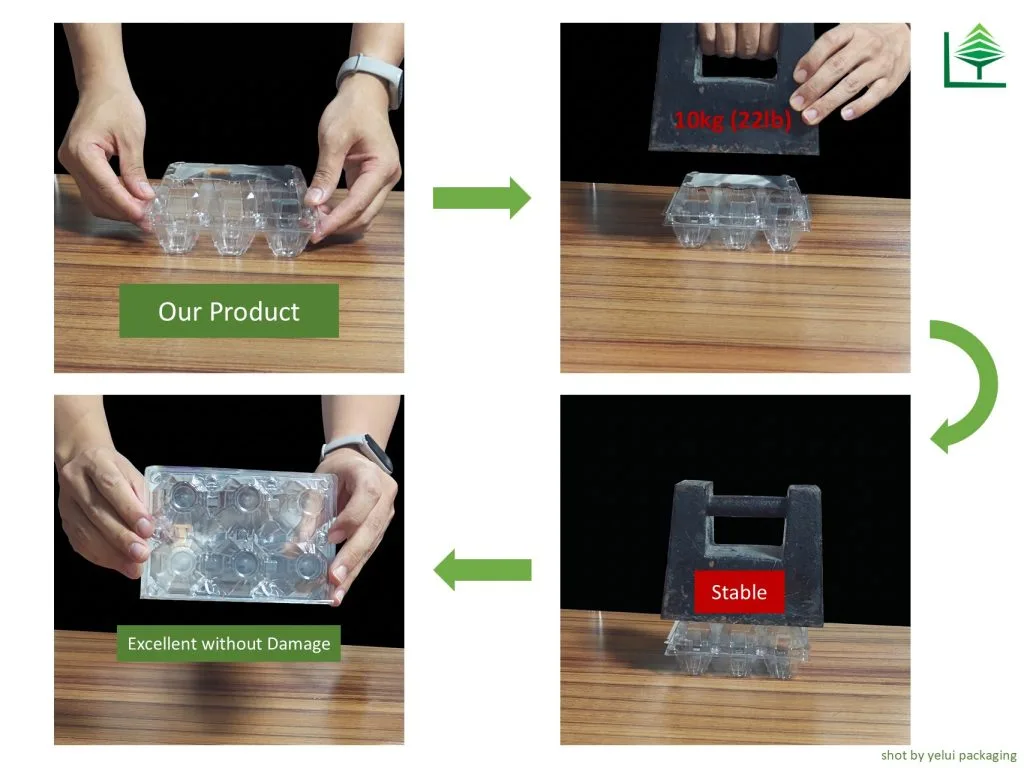
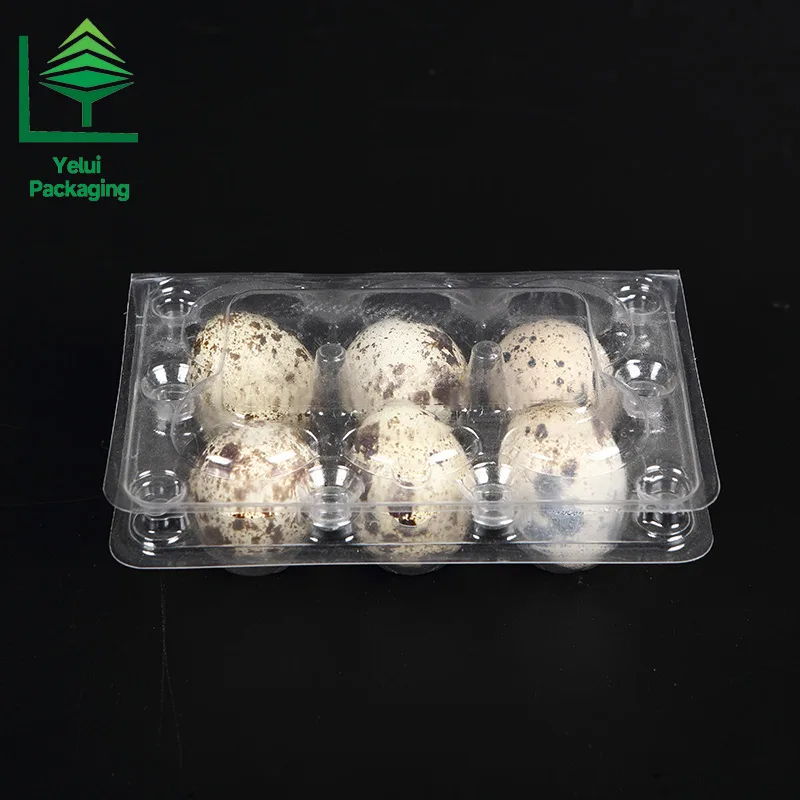
Quail eggs spent decades as a restaurant garnish. Over the last few years they moved into mainstream grocery, snack formats and foodservice, and the packaging followed a predictable route: take a hen egg tray, scale the drawing down, assume it works. It usually does not. A quail egg has a very different shell to content ratio, natural size variation across a laying flock is wide relative to the egg, and the total mass is small enough that a loose cell becomes a real problem. Packing quail eggs is its own design brief.
A quail egg is not a small hen egg
Two differences decide most of the engineering. The first is shell proportion. A quail egg shell takes a larger share of the total weight than a hen egg shell does, and it is comparatively tough, which is why quail eggs travel well through collection but peel badly after boiling. Strength at the shell is not the same thing as strength at the tray. The second difference is variation. Hen eggs are graded into narrow weight bands before packing and quail eggs usually are not, so a single layer can produce eggs that differ in weight by a third or more.
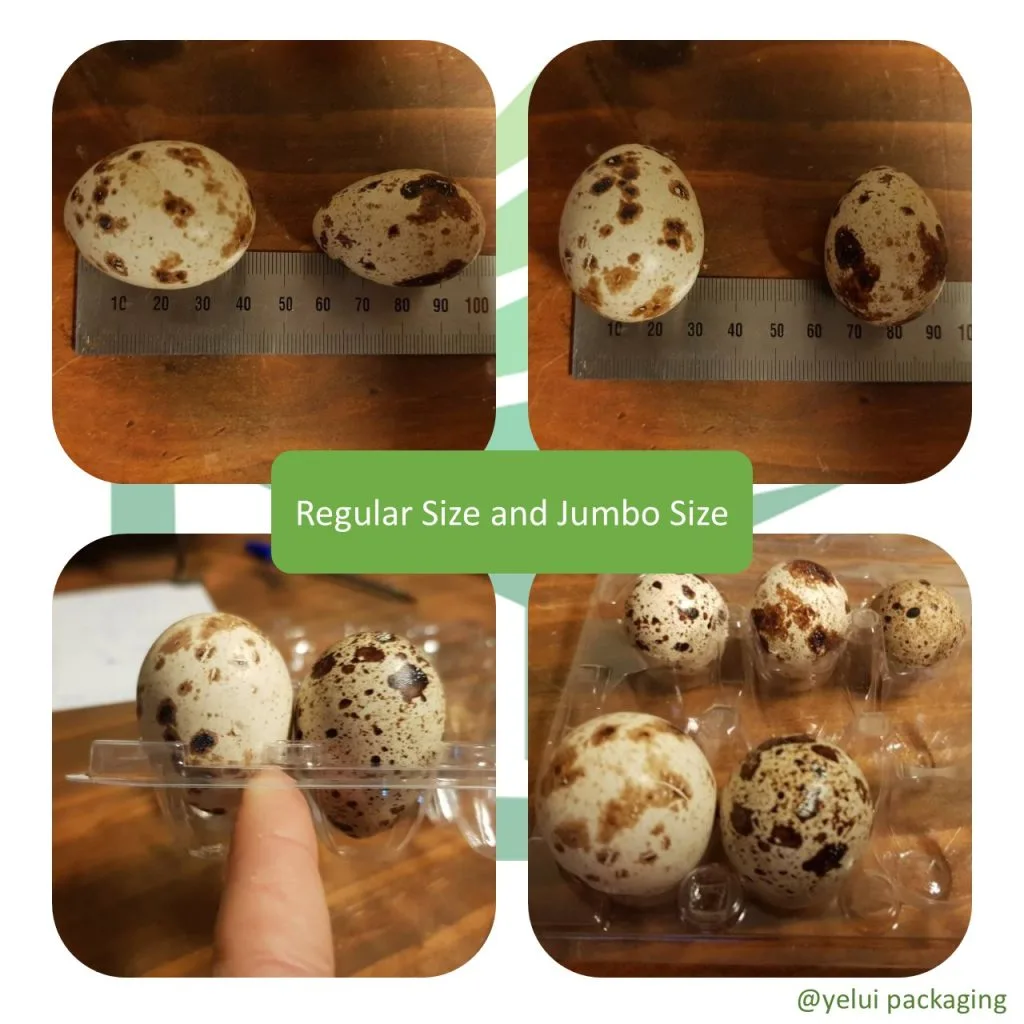
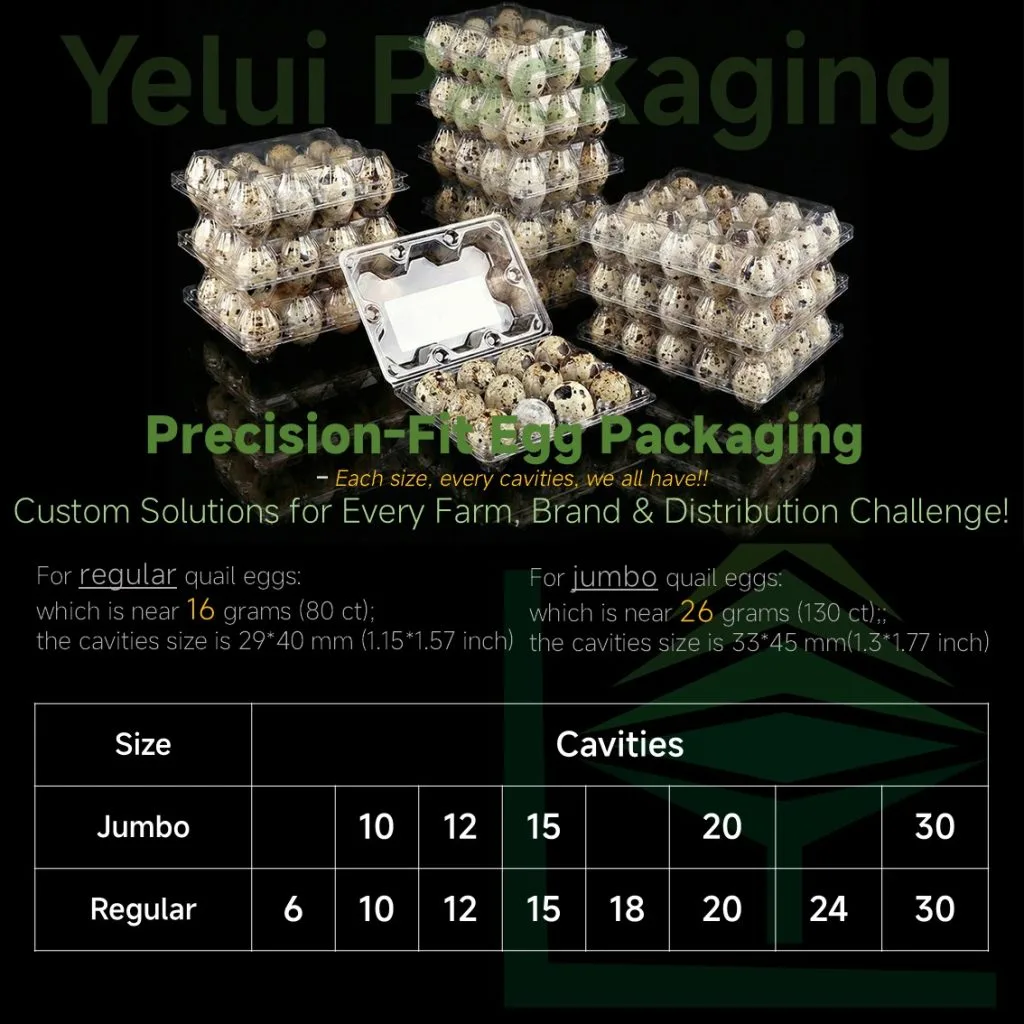
Published weight tables for quail eggs disagree with each other, because breed, bird age and feed all shift the number. The trade settles the argument with two practical grades: a regular grade and a larger jumbo grade, which is often the same physical product sold into pigeon egg channels. Fix the grade in writing and most cavity problems disappear before they ever reach a sample.
Cavity geometry decides the breakage rate
A cell has four working dimensions. The opening diameter sets where the widest part of the shell rests. The cell depth decides whether the egg sits on its shoulder or drops to the base. The taper, or draft angle, controls how the egg centres itself when the tray is shaken. The gap between neighbouring cells controls how much contact happens between eggs during transport.
Choose the wrong grade and the failure modes are opposite. A cavity sized for jumbo eggs lets small eggs sit low and rattle, so cracks appear on the shoulder. A cavity sized for small eggs holds a jumbo egg high, the lid presses on the crown, and the crack runs down the side once stacking load arrives. This is the most common reason a quail egg pack performs well in a sample room and badly inside a container.
Closures, stacking and the retail shelf
Quail egg trays use three closure families: a lid that folds over and locks onto the base, a separate two part pack held by snap fits, and a plain tray that travels inside a sleeve or carton. The choice is commercial as much as technical. A snap fit pack survives automated cartoning and repeated opening at home. A two part pack costs less per unit and stacks tighter in a master carton. A sleeved tray gives the brand a printable surface without printing on the food contact part of the pack.
Transparency is the reason many quail egg brands choose clear PET at all. The speckled shell is the product. A shopper can check the pattern, the count and the condition of the eggs without opening anything, and clear walls expose cracks instead of hiding them. The trade off is that nothing is concealed, so scuffing and internal dust are visible and the tray itself becomes part of the presentation standard. Our comparison of clear PET and molded pulp cartons covers the alternative in detail.
Ventilation and condensation
Quail eggs are small, so a full tray has a high surface to volume ratio and humidity behaviour matters more than it does in a hen egg pack. Molded fibre absorbs moisture. PET does not, which means any water released by the eggs or produced by a temperature change stays on the surface as condensation. Two design features manage it: ventilation openings that let air move through a stack, and a base geometry that keeps eggs clear of standing water when a pallet moves from a chilled container into a warm loading bay.
The rulebook for quail eggs is thinner than most buyers expect
European egg marketing standards sit in Regulation (EU) No 1308/2013 and are detailed in Commission Delegated Regulation (EU) 2023/2465. Both apply to eggs of hens of the Gallus gallus species. The European Commission has confirmed that quail eggs fall outside that scope, which means there is no harmonised Class A or Class B grading, no weight class table and no producer code duty for a quail egg pack.
That is freedom and risk in the same sentence. General food information rules still apply, and Regulation (EU) No 1169/2011 requires that a label does not mislead about the nature or the method of production of the food. Individual member states may also add requirements for particular products. With no standard grade to fall back on, the buyer specification sheet becomes the contract.
Food contact rules are stricter, and they do not care about the species. In the European Union, Regulation (EC) No 1935/2004 sets the framework while Regulation (EU) No 10/2011 controls plastic materials and migration limits. In the United States, PET for food contact is covered by 21 CFR Part 177 together with general good manufacturing practice. Recycled PET adds a separate layer, because the recycling process itself has to be authorised: Regulation (EU) 2022/1616 in Europe, and a favorable FDA review such as a letter of no objection in the United States.
A purchase order checklist for quail egg trays
- Name the egg grade and the weight band your farm actually fills, not the grade you hope to fill.
- Give the cavity count, the cell opening and the cell depth, and ask for a dimensional drawing rather than a photograph.
- State the stacking load the pack must survive, for example a filled master carton stacked four high in a warehouse.
- Confirm the closure type and the opening force you expect a shopper to need.
- Ask for a food contact declaration and, where recycled material is used, the authorisation behind it.
- Settle the decoration method before tooling, because sleeves and labels change the recyclability profile.
- Request a loaded drop test and a loaded compression test on the finished pack, not on an empty tray.
Quick answers
What cavity counts are common for quail egg trays?
Layouts of 6, 10, 12, 15, 18, 20, 24 and 30 cavities cover most retail and foodservice listings, and the larger jumbo and pigeon grades use the same counts with wider cells. The count should follow the pack size your retailer lists. Our product catalog lists the counts we run in clear PET.
Are clear PET quail egg trays recyclable?
Yes. PET is one of the most widely collected packaging polymers and a clear tray is a mono material item, which is the easiest structure to sort and reprocess. What reduces recyclability is decoration: a full body sleeve, a dark masterbatch, a paper label glued across the wall, or a laminated lid.
Do quail eggs need the same EU grading and marking as hen eggs?
No. The marketing standards in Regulation (EU) No 1308/2013 apply to eggs of hens of the Gallus gallus species, and the European Commission has stated that quail eggs sit outside that scope. The buyer specification therefore replaces the missing grade standard, so dimensions, closure and test requirements belong in the purchase order. General labelling duties still apply, and common questions about these trays are collected in our blister and egg packaging FAQ.
Quail egg packaging rewards a buyer who treats it as a fresh design problem rather than a scaled drawing. Fix the grade, size the cavity against that grade, choose the closure for the channel, and put the tests in writing. The material decision then becomes straightforward, because clear PET already does the hardest commercial job: letting a shopper see a speckled egg and a clean tray at the same time. Send us the egg grade, the pack count and your market, and we will confirm which cavity fits.
Grace Lin writes about packaging design and export practice for the Yelui Packaging team.