
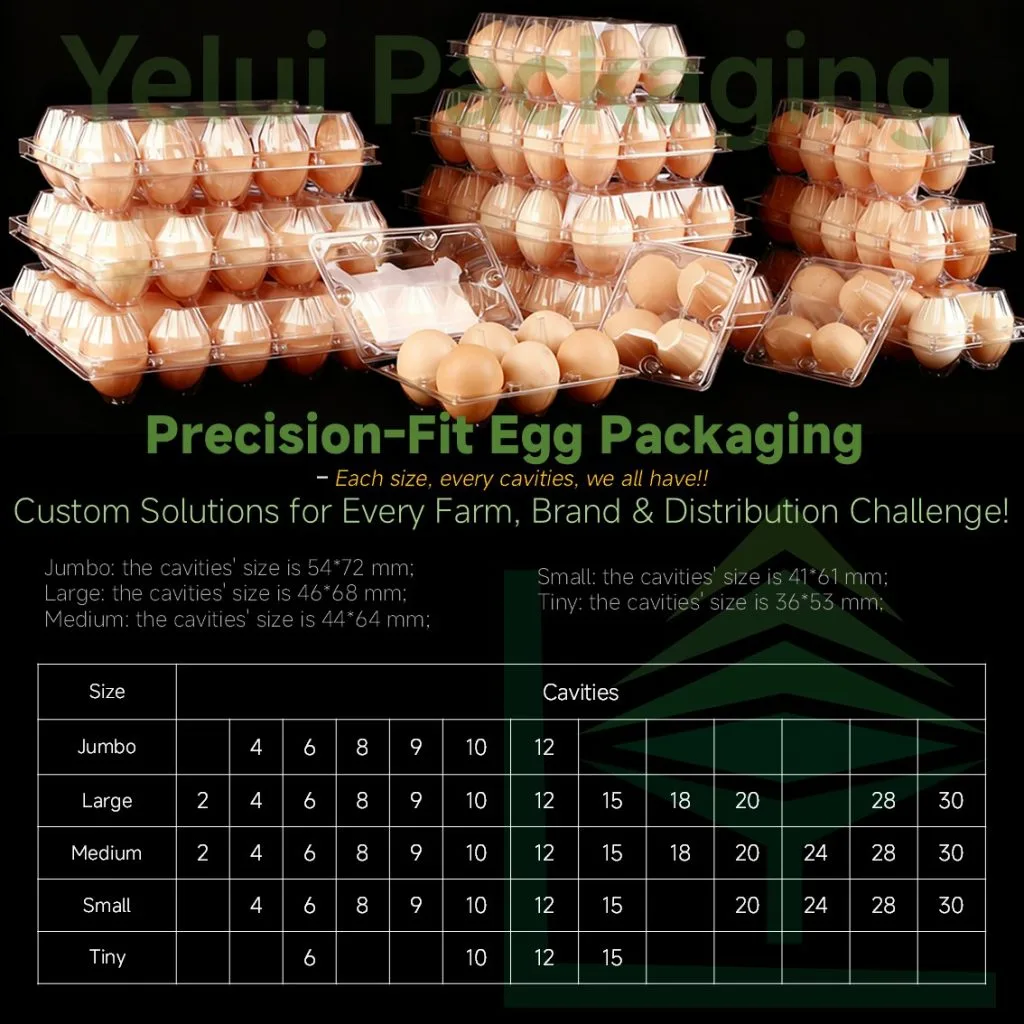
On a grading floor the symptom looks the same everywhere. A stack of clear PET egg trays feeds the denester, and every so often two trays rise together. The machine stops, an operator pulls the pair apart, and the line restarts. Trays that separate perfectly by hand can still jam an automatic machine, because a denester peels one tray from the top of the stack at a fixed rhythm and assumes the gap between trays always sits in the same place. The encouraging part is that denesting is decided at the tooling stage, not on the line, and the design rules behind it are well documented.
What nesting asks of a tray
Egg trays ship empty and nested, one inside the other like cups, because a container of loose trays would carry mostly air. Nesting puts each tray slightly inside the one below, and denesting is the act of separating that stack again, one tray at a time, at line speed. Whether it works comes down first to the taper of the cavity walls. Industry guidance places a 10 degree non locking taper on all cavity walls as the level where most designs separate without any special feature. Some trays manage with 7 degrees, while shallow trays under 16 mm deep usually need about 15 degrees, because a shallow wall gives the stack little angle to lean on.
Around the taper sit the supporting tolerances: cavity corners with a radius of at least 3 mm, a flange to cavity tolerance of about plus or minus 0.9 mm, a flange width near 9.5 mm, and consistent wall thickness without wrinkled flanges, because a wrinkle on one tray wedges against the wall of the tray below it.
Vacuum lock, friction and static
Three forces lock a nested stack. The first is vacuum lock. When two flat bases sit against each other, air cannot flow in between and separating the trays becomes a suction task, so good designs leave a breathing path between the air inside the stack and the air outside. The second is friction. PET on PET slides easily at low contact area and grips as contact grows, so material makers use denesting or slip additives, typically silica or wax micro particles that roughen the surface and cut the contact area between stacked trays. A silicone emulsion release agent on one surface works in the same direction, and any additive on a food contact tray must carry food contact compliance for the destination market, so the request belongs in the specification, not in a phone call. The third force is static. Dry air, long storage and heated winter buildings let charge build on PET surfaces, and static does not respect a good taper angle.
Denesting lugs and staggered tooling
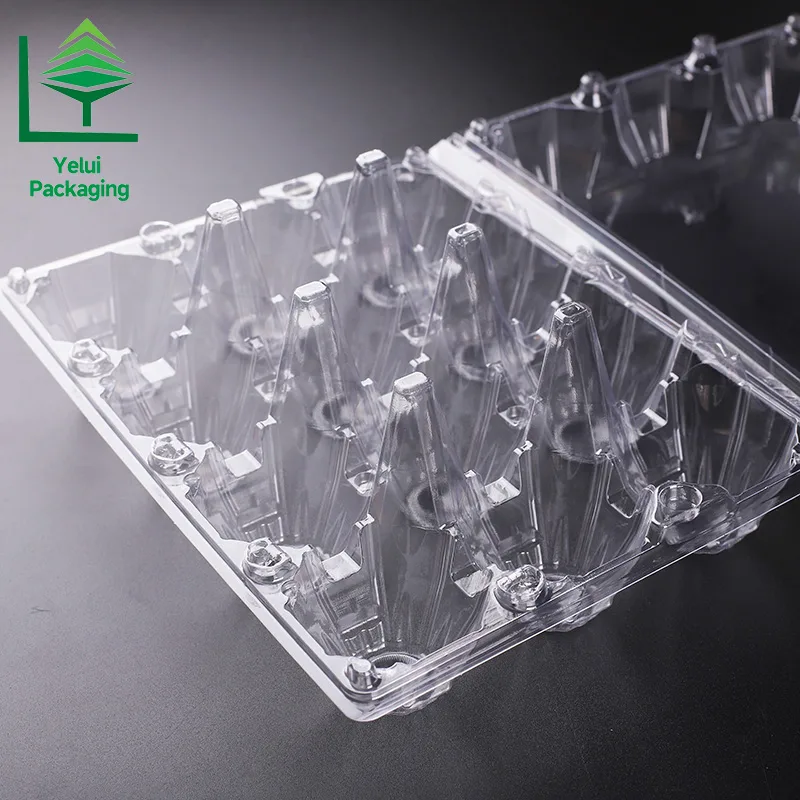
When taper alone cannot keep the trays apart, denesting lugs hold a small, consistent gap between nested trays so the machine always has something to work with. Common guidance calls for semicircular lugs with a diameter of at least 2.5 mm and a depth of at least 3 mm, one in each of the four corners, plus extra lugs on a grid of roughly 50 mm centres for larger trays of 400 mm square and above. One detail is easy to miss: use at least four different die cavities and stagger the lug positions between them by at least 6 mm. If every tray in the stack carries its lugs in the same place, the lugs simply nest into each other and the feature cancels itself out. None of this is visible in a product photo, which is why the lug layout belongs in the tooling drawing package beside the cavity dimensions and the trim line.
What line speed demands
Denesting failures scale with speed. Farm packing machines are rated from roughly 14,400 eggs per hour at the small end to 72,000 at the large end, and the largest grading plants reach 288,000 eggs per hour. At 30 eggs per tray that is about 480 to 2,400 trays per hour, or one tray separated every 1.5 to 7.5 seconds. At that pace a denester needs the gap between trays to appear in the same place every single time, which is why machine builders ask for tight tolerances on the flange and the pitch and add missing tray detectors to catch feeding faults. A stack that releases 99 trays in 100 by hand still stops the line every few minutes at full speed, and a year of those stoppages usually costs more than the price difference between a careful tray and a careless one.
The table top test
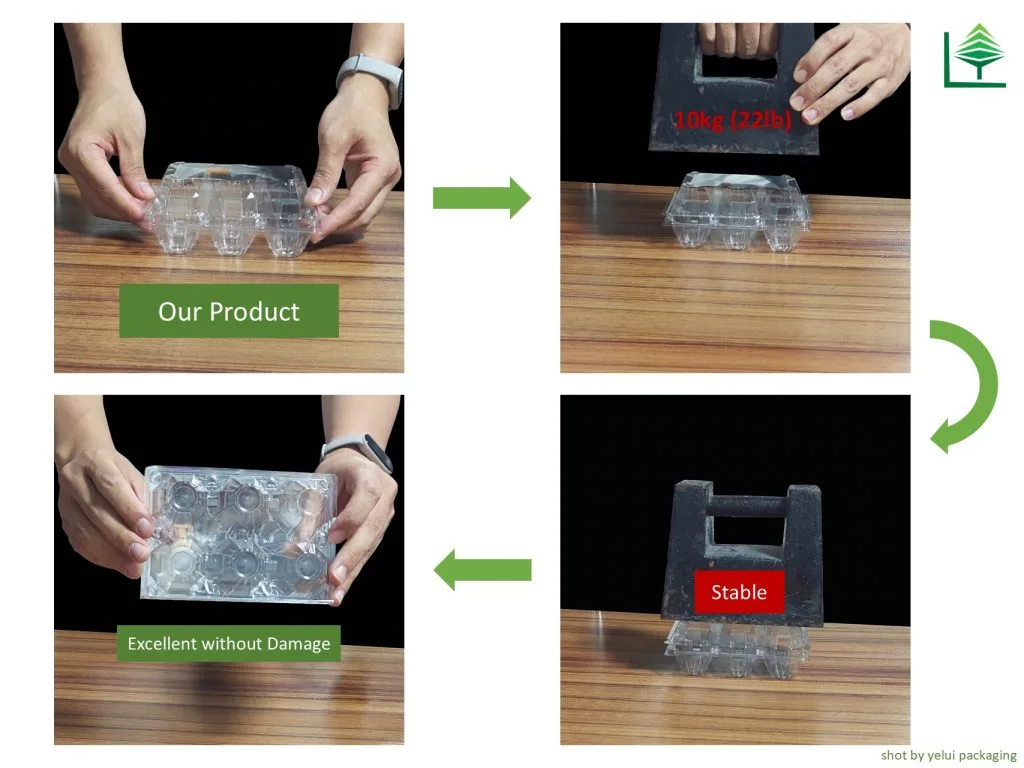
Before any machine is involved, packers and machine makers use a simple stack test that needs nothing but a bench. Build a stack about 600 mm high, separating and restacking each tray first so that none of them start nested. Compress the stack by about 25 mm, then slowly remove the trays one at a time from the top, all the way down through the stack. If the trays separate without blocking from the first to the last, the design is typically acceptable for high performance packing lines. A failed stack does not always mean a redesign, because some trays run reliably with actuated clips or pneumatic assistance, but that has to be proven on the real machine.
The same discipline carries into shipping: stack trays in columns, under pack each column by about 1 percent, and lay the stacks on their sides in the container so the nesting geometry never carries a load it was not designed for.
What to put in the specification
- Taper. The angle per cavity wall, stated in degrees, not described as easy release.
- Lugs. Positions, diameter, depth and the staggering plan across die cavities.
- Material. Resin type, gauge, and a written statement of any slip or denesting additive with its food contact status.
- Tolerances. Flange to cavity, flange to flange and cavity to cavity, in millimetres.
- Acceptance. The 600 mm stack test recorded on video, and a trial on your machine or the supplier test rig before the tooling balance is paid.
- Pack out. Column height, under pack allowance and side loading for the container.
Each of these items is cheap to write down and expensive to discover on the line, and our articles on tooling quotes and choosing a cavity count cover the neighbouring decisions.
Quick answers
What taper angle stops egg trays locking together?
Industry guidance places a 10 degree non locking taper on all cavity walls at the level where most thermoformed trays separate without special features. Some trays manage with 7 degrees, and shallow trays under 16 mm deep usually need about 15 degrees. Check the taper first, before blaming additives or the machine.
Why do trays separate by hand but jam on the packing line?
A hand pull is slow and forgiving, while a denester peels at a fixed speed and expects the gap between trays to be in the same place every time. The usual causes are lugs placed identically on every die cavity so they nest into each other, static charge on PET surfaces, vacuum lock between flat bases, and tolerance stack across the flange. The 600 mm stack test with compression exposes most of these before the machine ever sees the tray.
Do rPET trays denest differently from virgin PET trays?
They can. Recycled content shifts surface friction and stiffness slightly, and variation from batch to batch is wider than with virgin resin, so a tray proven in virgin PET is not automatically proven in rPET. Ask the supplier to declare any slip or denesting additive in writing with its food contact status, and rerun the stack test on production material rather than on a lab sample.
Denesting is invisible when it works and expensive when it does not, and almost every fix is a drawing decision taken weeks before the first production run. Our products section lists the egg tray formats we form and tool today, our blister egg packaging FAQ answers the questions that come up before an order, and our introduction to blister packaging explains the process behind the tray itself.
Grace Lin writes about packaging automation and export procurement for the Yelui Packaging team.