Ask for the best selling egg pack in Germany, then in Japan, then in the United States, and you will receive three different answers to a question that sounds simple: how many eggs should one pack hold? The number on the front of the pack looks like a marketing decision. In practice it is the first number in a long chain. It fixes the cavity count in the mold, the footprint of the tray, the export carton, the pallet pattern and the price point on the shelf. A pack size is chosen once, in steel, and lives with a brand for years. This article sets out how the markets differ, what the rules actually fix, and how to choose a count you will not regret tooling.
Household size is quietly rewriting the pack
The quiet force behind pack sizes is the size of the household. Eurostat puts the average European household at 2.3 persons in 2024, and single person households have become the most common household type in the Union at roughly a third of the total. Japan reported an average of 2.2 persons per household in its 2024 national survey, a record low. Korea sits near 2.4 and the United States near 2.5. Consumption stays high where eggs are a staple: figures cited by the Congressional Research Service put United States per capita consumption at about 274 eggs in 2024, near three quarters of an egg per person per day.
Put those numbers together and the arithmetic gets uncomfortable for large packs. A household of 2.5 people eating at that pace finishes a dozen in about six days, a six count in three days and a thirty count in about sixteen. Every extra day an egg sits at home is a day taken out of a window that already starts narrow. In the European Union the date of minimum durability may not exceed 28 days after laying and hygiene rules limit retail sale to 21 days after laying. Eggs reach the shelf several days after they were laid, so a large pack bought on a Saturday has to survive most of the legal window in a home refrigerator.
What the rules fix, and what they leave open
Neither the European Union nor the United States tells a packer how many eggs to put in a pack. Both systems constrain everything around the count instead. European Regulation (EC) No 589/2008 grades Class A eggs by weight: XL at 73 g and above, L from 63 to 73 g, M from 53 to 63 g and S below 53 g. Class A eggs may not be chilled below 5 °C, must be graded, marked and packed within 10 days of laying, and carry a best before date no later than 28 days after laying. The United States works from the other end. USDA weight classes are a minimum net weight per dozen, from Jumbo at 30 ounces down to Peewee at 15 ounces, with Large, the everyday class, at 24 ounces per dozen, near 57 g per egg and close to the European M grade. American cartons may carry an expiration date no more than 30 days from packing and quality dating no more than 45 days from packing.
The count itself is convention. That is why the same physical egg travels in a ten count in Tokyo, a dozen in Chicago and a six count in Paris, and why a supplier that serves several markets keeps a catalogue of counts rather than one global tray.
The counts, and where each one earns its shelf space
Every count in a catalogue has a job to do.
- Six is the smallest retail unit. It serves single households, premium niches such as quail and specialty eggs, and gifting. Packaging cost per egg is highest here, and so is the margin the shelf expects.
- Ten is the metric dozen. It is a fixture of German and Japanese retail, divides neatly into promotional pricing and asks for less shelf depth than a twelve.
- Twelve is the dozen, the default in the United States and much of the English speaking world, and the count the American weight classes are literally built on, since they are defined per dozen.
- Eighteen sits between the weekly dozen and the club pack in the United States.
- Twenty to thirty covers family packs, foodservice and Gulf retail, where a 30 count tray with a handle has become a standard sight. The price per egg falls as the count rises, so these counts dominate where households are larger or meals are cooked in volume.
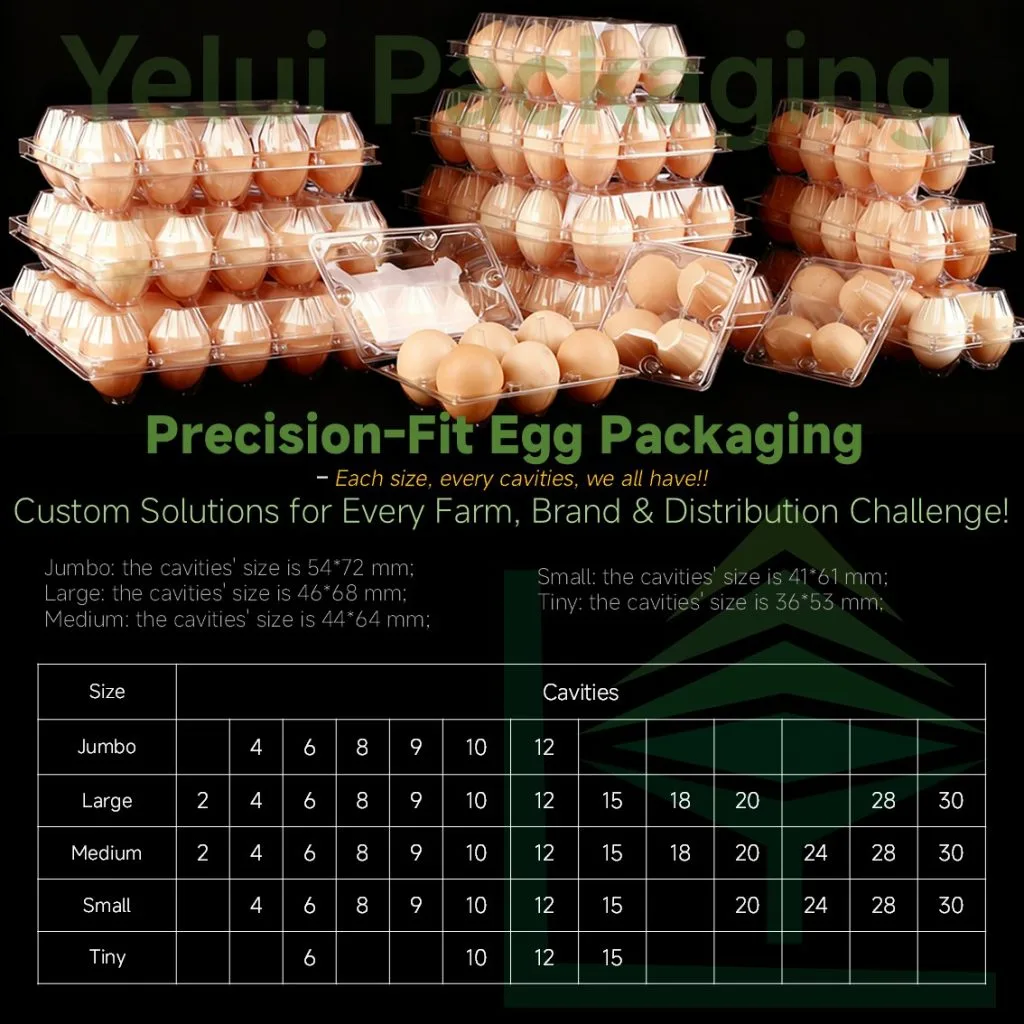
Quail eggs run their own ladder from 6 to 30 cavities, and the small format needs its own rules, set out in our article on quail egg packaging. For chicken eggs, a 12 egg tray in a 3 by 4 layout remains the reference point that every other count is compared against.
What the count does to the tool, the tray and the freight
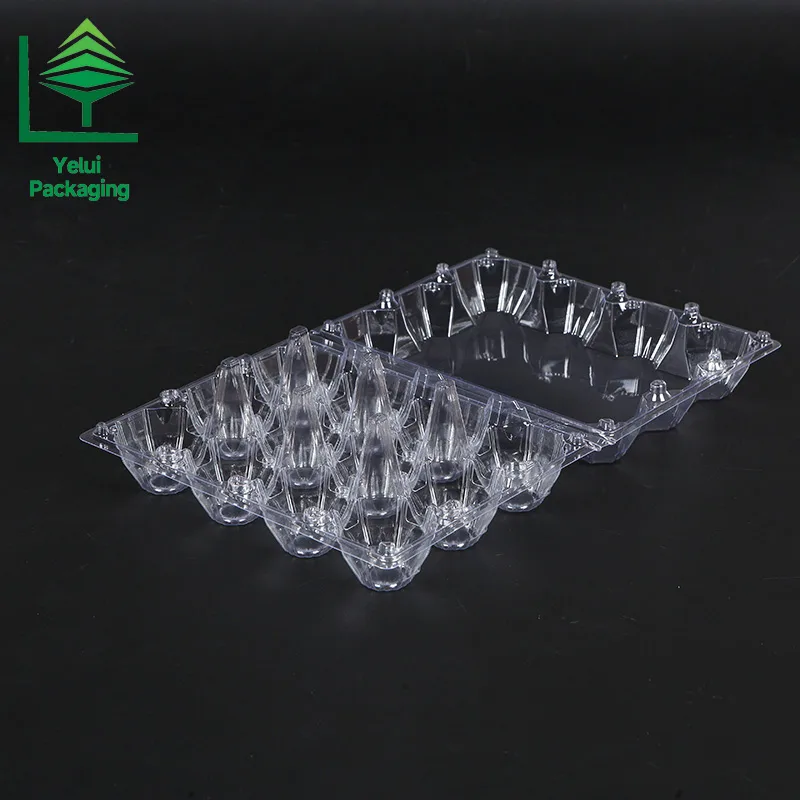
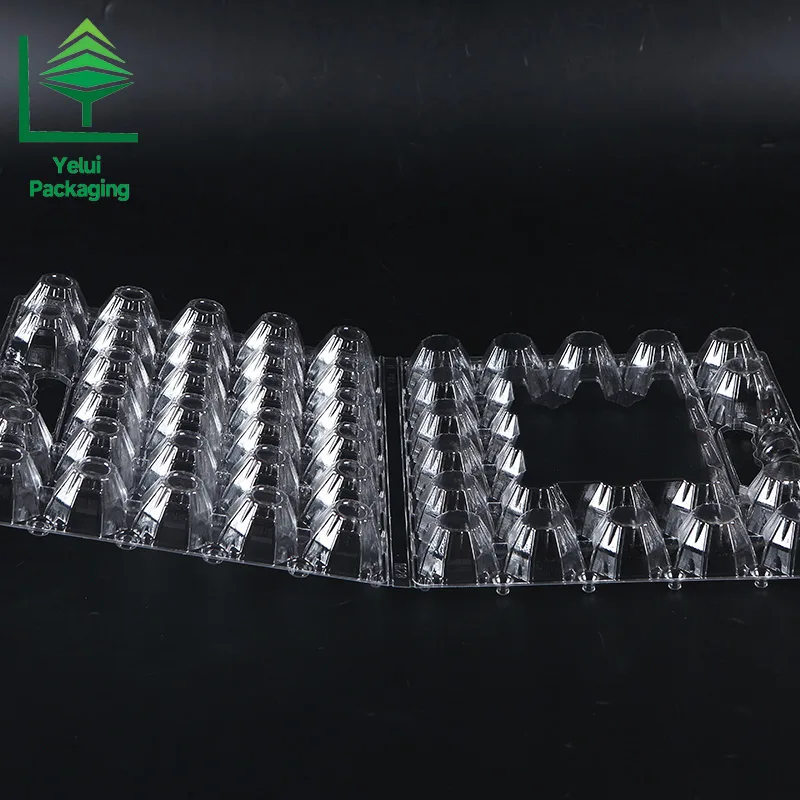
A cavity count is a tooling decision. Every count in a cavity size needs its own mold, so a brand that wants six, twelve and thirty in the same size is buying three tools, not one. The savings come from wall sharing: a 24 cavity tray is not twice the footprint of a 12 because rows share walls, and a tray that grows along one axis can keep the pallet pattern alive while a tray that grows along both axes usually does not.
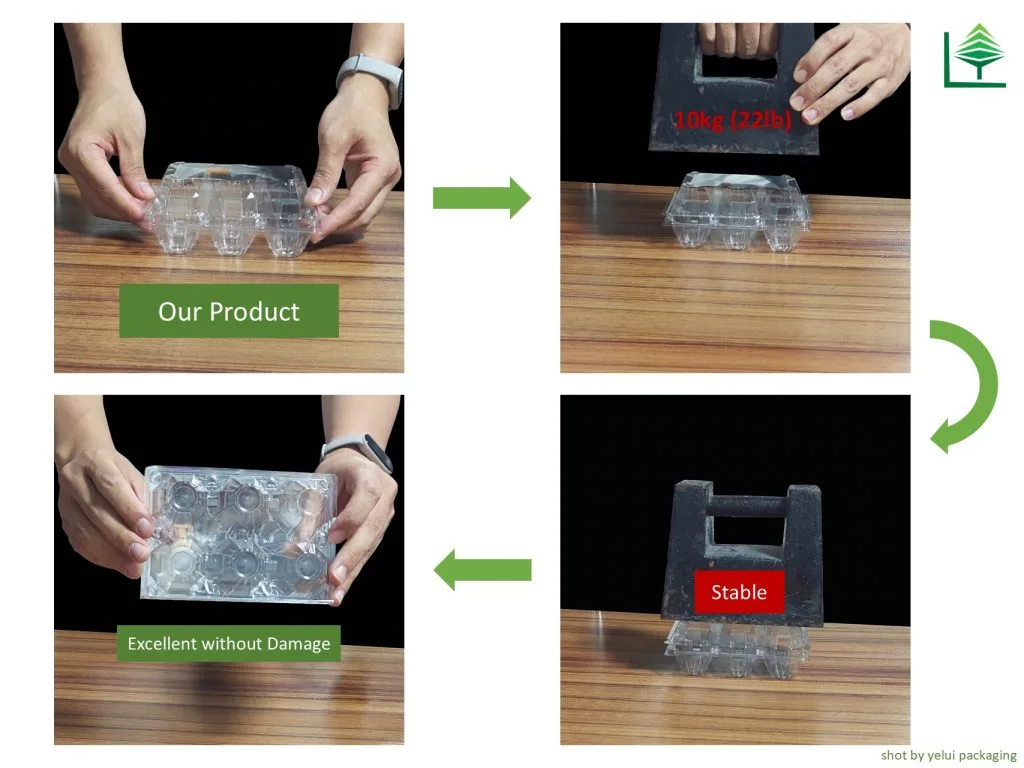
Freight follows the same logic. Fewer, larger packs mean less plastic per egg and fewer cartons per container, which is one reason the thirty count travels so well; our article on carton geometry and freight costs walks through that arithmetic. The tradeoff is handling weight. A filled thirty count of large eggs weighs just over two kilograms, which is why the large counts in our catalogue, such as the 28 egg tray with a handle, carry reinforcement and a grip. Weight is also where breakage risk begins, a subject covered in our guide to transit testing.
A short checklist before you commit to a count
- Start from the household you sell to, not from the mold you already own. Household size decides how long a pack stays open in a fridge.
- Check the weight class your count implies in the destination market, and match the cavity size to it.
- Ask what the count does to the export carton and the pallet, not only to the unit price.
- Price the packaging per egg, not per tray, and compare counts on that number.
- Sample the count in the destination market before tooling it, and watch how fast it rotates.
More practical answers about materials and food contact rules sit in our blister egg packaging FAQ and our introduction to blister packaging.
Quick answers
What is the most common egg pack size in Europe?
Six and ten count packs dominate most of Western and Southern Europe, the ten count is a fixture in German discount channels, and the United Kingdom and Ireland keep the dozen. Counts of 20 to 30 are growing where households are larger and in foodservice.
Does a larger pack always mean a lower price per egg?
Packaging and logistics per egg fall as the count rises, but the shelf price gap is narrower than the cost gap, because retailers price the category and larger packs carry a waste risk for the shopper. The discount is real, just smaller than the cost saving.
Can one mold produce more than one pack size?
No. A thermoforming mold forms one count in one cavity size. What suppliers can share is the sheet width, the cavity size family and sometimes the carton, which is why it pays to plan counts as a family before the first tool is cut.
A pack size is the rare packaging decision that shoppers see every week and buyers only make once. Choose it from the household outward, check what it does to the mold, the carton and the pallet, and the count will sell eggs long after the tool is paid off. Browse the full range of clear PET egg trays from 4 to 30 cavities in our products section, or send us your market and weekly volume and we will suggest the count, the cavity size and the carton that fit.
Grace Lin writes about retail egg packaging and export sourcing for the Yelui Packaging team.