The moment a sealed pallet leaves the packing hall, every egg inside it carries all the freshness it will ever have. What the packaging decides is how much of that quality survives the warehouse, the weeks at sea and the shelf at the store. The tray looks like a cosmetic choice, yet it works directly on the physics of the egg through three channels: how the pack rides the cold chain, how air moves around it, and what happens when a cold pack meets warm humid air.
What changes inside an egg after packing
An eggshell looks like a sealed container and is not one. Commonly cited figures put the pore count at 7,000 to 17,000 per shell, each opening 10 to 50 µm across, and through those pores the egg loses water and carbon dioxide from the moment it is laid. As carbon dioxide leaves, the albumen climbs from a pH near 7.6 toward 9.0 to 9.4, the thick white thins and the Haugh unit, the standard measure of interior quality, falls. The lost water also enlarges the air cell at the blunt end. European standards allow Class A eggs an air space of no more than 6 mm, and United States grading draws its lines nearby, at 3.2 mm for Grade AA and 6.4 mm for Grade A.
Temperature decides how fast all of this happens. A 2011 study in the Asian Australasian Journal of Animal Sciences stored eggs for ten days at three temperatures. At 5 °C the Haugh unit barely moved and weight loss stayed at 0.55 percent. At 21 °C the eggs fell from 91.3 to 72.6 Haugh units and lost 1.18 percent of their weight. At 29 °C the reading dropped to 60.9 and the loss reached 3.67 percent. No tray can change the pores. What a pack and its chain can change is the temperature and humidity history around the shell.
Two date regimes, two different jobs for the pack
In the European Union, Regulation (EC) No 589/2008 caps the best before date at 28 days from laying, hygiene rules under Regulation (EC) No 853/2004 require Class A eggs to reach consumers within 21 days, and eggs must be graded, marked and packed within 10 days. Claims of extra or extra fresh last only to the ninth day. The Union sets no single storage temperature: hygiene rules ask for a preferably constant temperature that best preserves the eggs, member state guidance keeps them below 20 °C, and Class A eggs may not be chilled below 5 °C except in transport for up to 24 hours or on retail premises for up to 72 hours. In the United States the FDA requires shell eggs to be held at an ambient 45 °F, or 7.2 °C, beginning 36 hours after laying, and retail cartons carry the SAFE HANDLING INSTRUCTIONS statement.
The regime decides what the pack must survive. An ambient European chain stresses temperature stability and ventilation, because the pack spends weeks between 10 and 20 °C. A refrigerated American chain stresses condensation, because every trip from cold room to warm dock pushes the shells below the dew point of the surrounding air. The same tray can be right for one chain and wrong for the other, which is why the first question is not which material but which chain.
Where the tray helps, and where it cannot
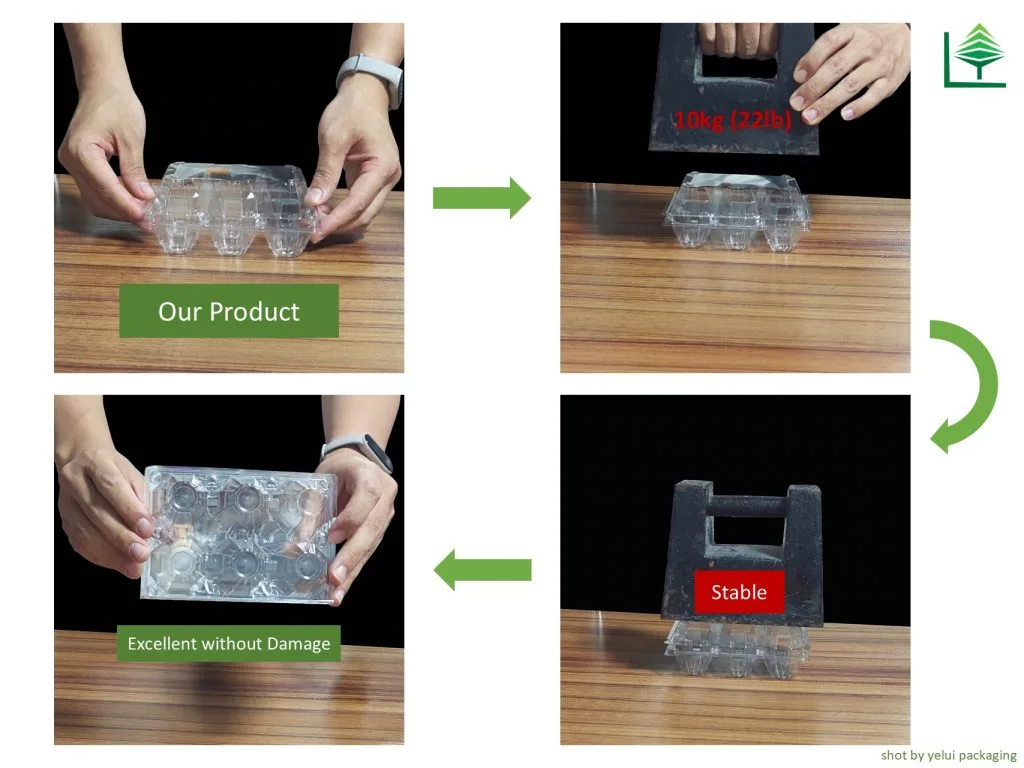
A tray touches shelf life through three jobs. The first is geometric: eggs must not move. A cavity that lets an egg travel a few millimetres turns vibration into micro cracks, and every crack is an open door for moisture loss and bacteria. Cell fit is a freshness topic, not only a breakage topic, as our article on transit damage and tray testing explains.
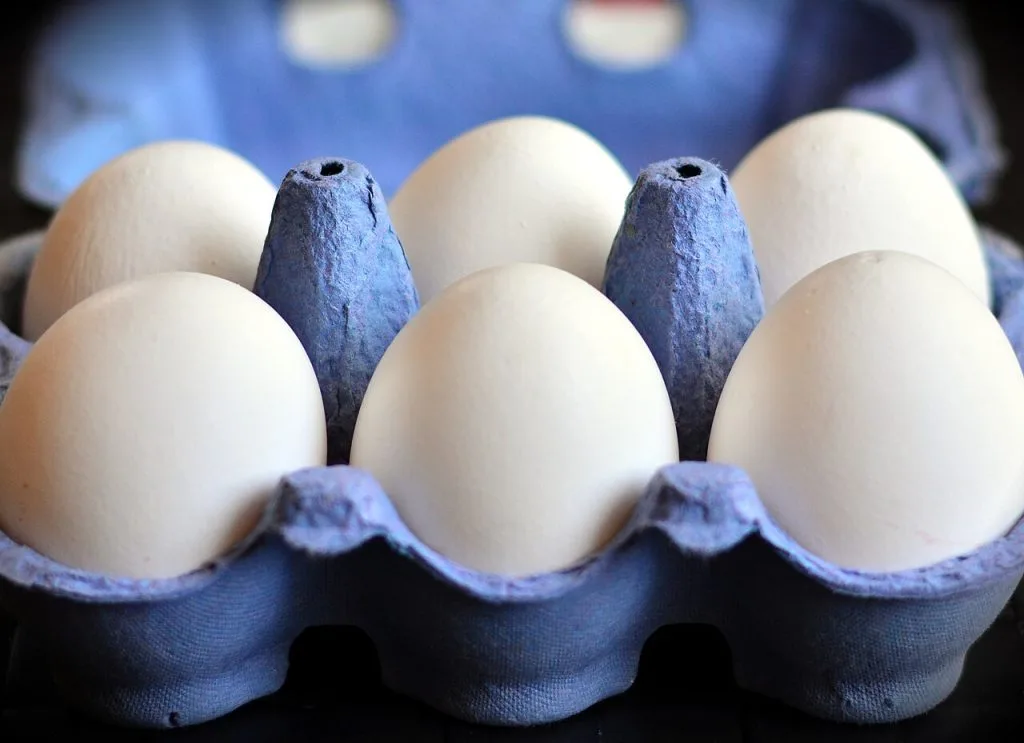
The second job is the micro climate inside the closed pack. Clear PET does not absorb water and keeps its stiffness in humid rooms, so it leaves a wet wash down area unchanged where a fiber tray would soften. PET is, however, a moderate vapour barrier rather than a hermetic one: a closed tray still exchanges water vapour slowly through its walls, so lid style and vent area, not the resin alone, decide how fast a pack dries out or fogs. Molded fiber works in the opposite direction. It breathes and buffers a little surface moisture, and it weakens only when truly soaked. Neither material is the enemy of freshness; each simply fails in different rooms.
The third job is the surface of the pack itself. When eggs leave a cold room at 5 °C into air at 25 °C and 70 percent humidity, moisture condenses on the shells and on the inside of the lid. The visible symptoms are fogging, lifting labels and wet tray floors; the quiet ones are softened cartons and, above roughly 85 percent relative humidity, mold risk. Storage guidance for shell eggs puts the comfort zone near 70 to 80 percent humidity, high enough to slow weight loss, low enough to keep surfaces dry.
Five controls that matter more than the material
- Pack at egg temperature. Warm eggs carry their own humidity into a closed lid. Pack after the eggs reach storage temperature.
- Match the lid to the chain. A fully closed clear lid suits a refrigerated chain that moves fast; a longer ambient chain wants more vent area.
- Fit the cavity to the weight class. An M egg in an L cavity travels, and travel inside the pack is quality loss.
- Ventilate the pallet, not only the tray. Carton walls, pallet wrap and stack pattern decide air exchange far more than the tray does.
- Keep the room stable. A steady 15 °C storeroom preserves more quality than one that swings between 5 and 25 °C, even when both average the same number.
What to ask a supplier before you order
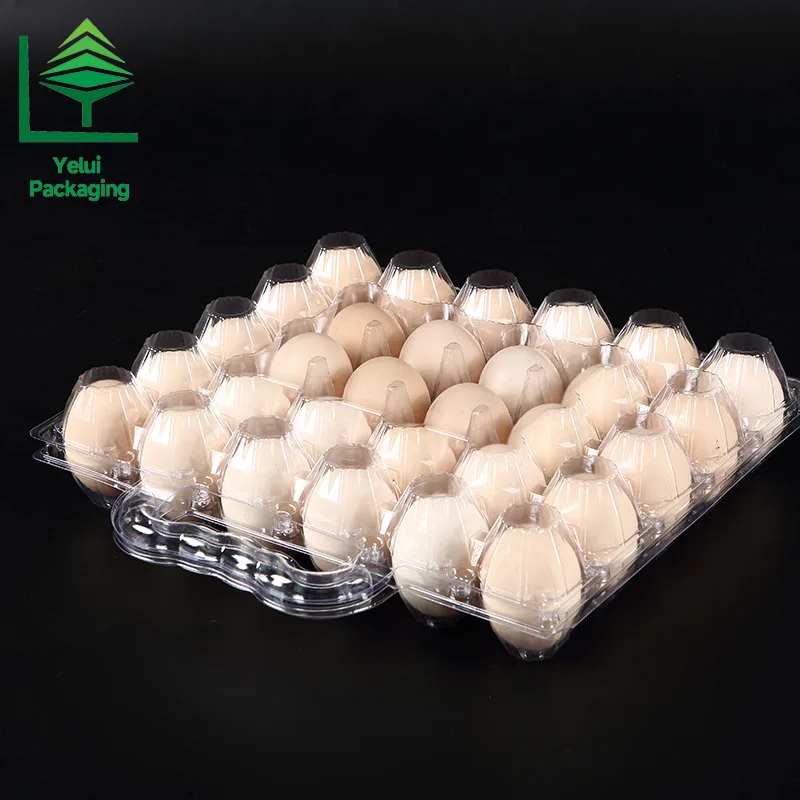
The specification sheet should answer four questions. What is the water vapour transmission of the sheet, and how does the closed pack behave in a fogging trial? What share of the lid area is vented, and can that venting be adapted to different chains? How does the tray perform in a stack test at your pallet height and your room humidity? And which food contact papers travel with the product, Regulation (EC) No 1935/2004 with the migration limits of Regulation (EU) No 10/2011 for Europe, or the applicable sections of 21 CFR Part 177 for the United States? A simple condensation trial costs little: pack cold eggs, hold the closed packs for six hours at 25 °C and 80 percent humidity, then open and inspect for fog, water films and label lift. The trays in our products section, including the 30 egg tray with a handle, can be compared on lid style and vent pattern side by side.
Quick answers
Does a clear PET tray shorten egg shelf life compared with molded pulp?
No. Eggs lose water through the pores of the shell no matter what surrounds them, and temperature history dominates everything else. PET slows vapour exchange slightly more than fiber but does not seal the pack, so the difference inside the tray is small. Where PET clearly helps is in humid rooms, because it neither absorbs water nor loses strength. Choose between them on presentation, recycling stream and room humidity, not on shelf life claims.
Why do eggs fog up inside a closed tray after the cold room?
Fog is condensation. Shells leaving a cold room sit below the dew point of the warmer air, so water settles on the eggs and the inner lid until the pack warms past it. The effect fades when packs warm gradually, when the room is drier, or when the lid carries more vent area. Persistent fogging points at the handover between cold room and packing line, not at the tray alone.
What temperature and humidity should an egg storage room hold?
The European Union prescribes no single figure, only a preferably constant temperature suited to conservation, with practical guidance below 20 °C and no chilling of Class A eggs below 5 °C before retail. The United States requires an ambient 7.2 °C or below from 36 hours after laying. For humidity, 70 to 80 percent balances weight loss against condensation and mold. Stability matters as much as the setpoint, because every swing across the dew point puts water on the shells.
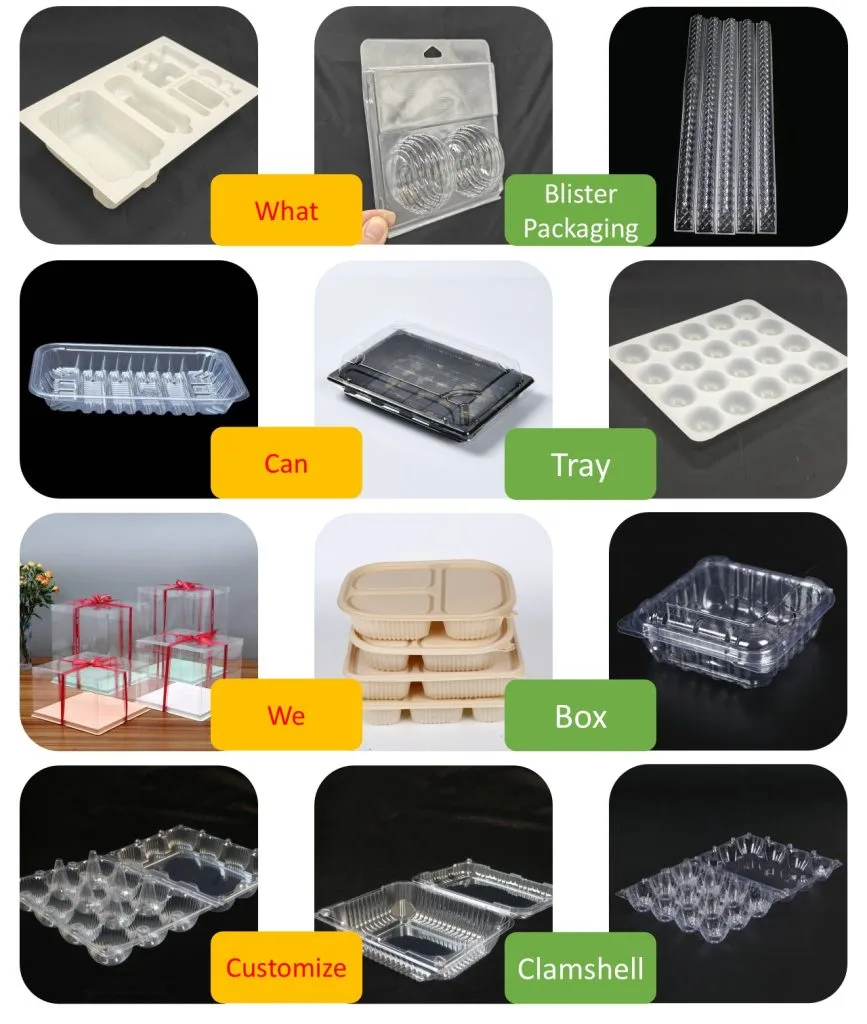
Shelf life is set at the pack line and in the cold chain, long before the date code is printed. A tray that holds its cavities, breathes at the right rate and survives your rooms protects the days you have already earned. More background sits in our introduction to blister packaging and our blister egg packaging FAQ, or send us your chain, your rooms and your markets and we will suggest the tray that fits them.
Kevin Zhao writes about export packaging and quality control for the Yelui Packaging team.