
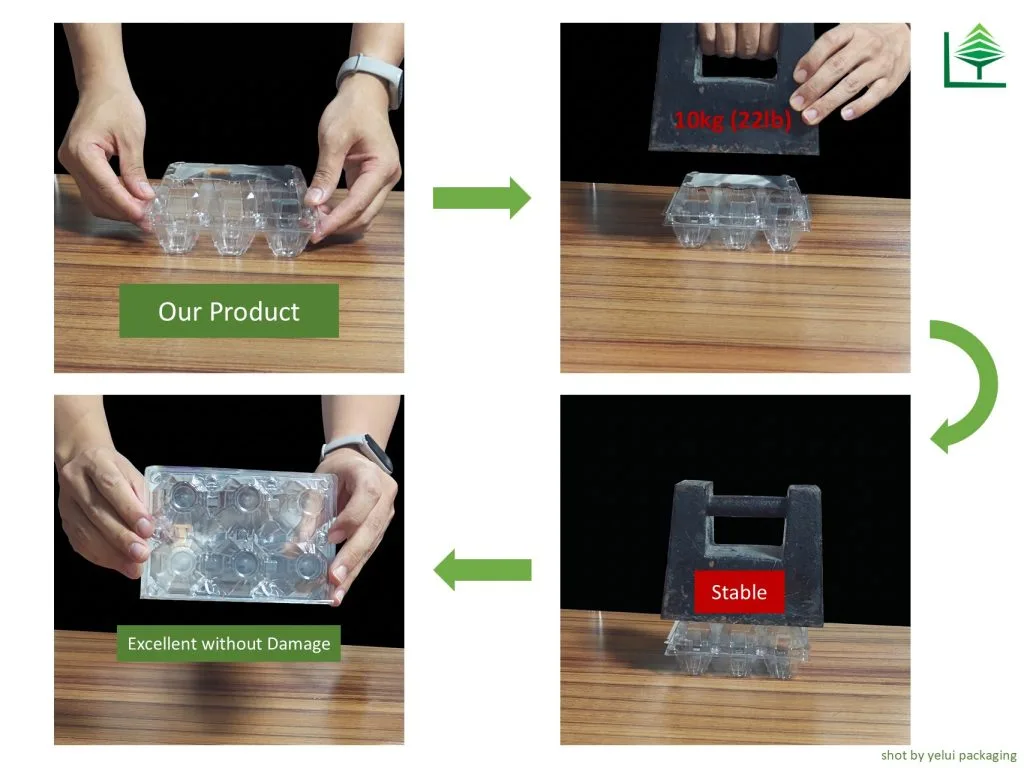
A sample tray arrives in perfect condition, the order is placed, and three months later the damage report from the destination market tells a different story. The instinct is to blame the tray and change suppliers. Published data says that instinct is usually wrong. This article covers what the research on eggshell damage shows, which tests reproduce it in a laboratory, and how to write protection numbers into a purchase order.
Where the losses are actually generated
A widely cited review of egg loss data, published by Hamilton and colleagues, found that 5 to 18 percent of eggs produced never reached a consumer in saleable condition, with average annual losses near 6.4 percent in the United States, 6.7 percent in the United Kingdom and 8 percent in Germany. The same work broke the loss down by stage, and the order surprises most buyers. Damage at the point of lay and inside washing, grading and packing ran at roughly 3.5 and 3.7 percent, while the last road leg to retail accounted for about 1 percent.
The truck is not the biggest culprit. The farm and the grading line are. A vibration study published in Poultry Science recorded typical peak accelerations between 15 and 45 g as eggs moved through a real transport chain, then modelled what happens when that peak moves. Easing peak acceleration from 30 g to 20 g cut predicted fracture occurrence from 7.7 percent to between 0.3 and 1 percent. Raising it to 40 g pushed it up to between 42 and 55 percent. A tray does not create breakage. It decides how much of that acceleration reaches the shell.
What actually cracks a shell
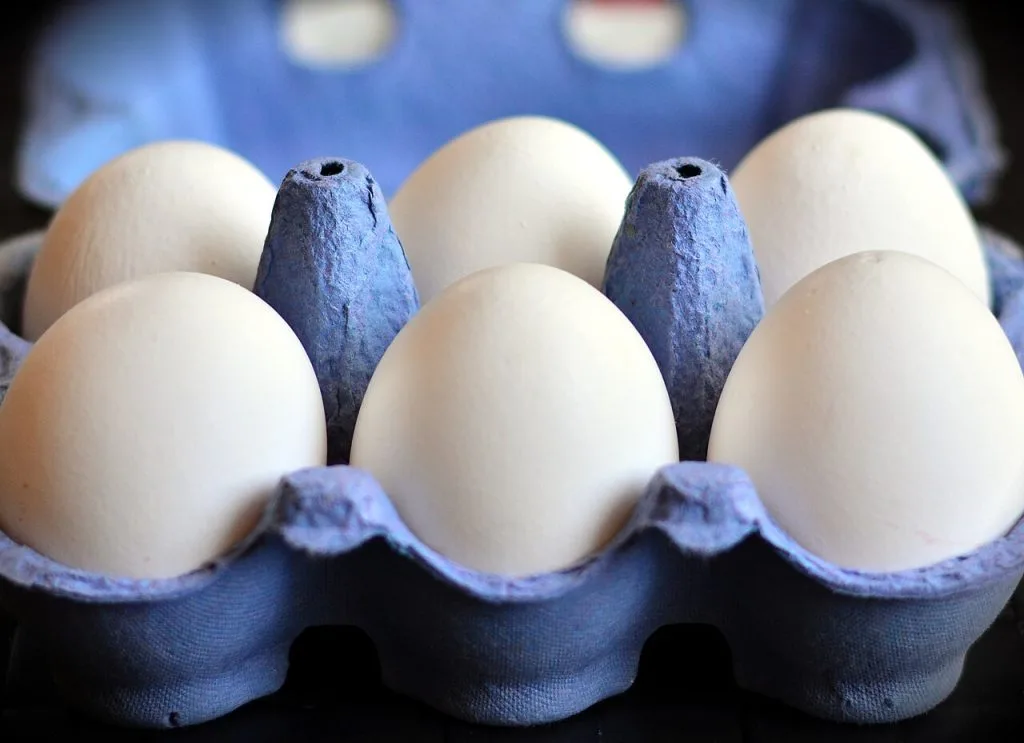
An eggshell is a thin ceramic dome resting on a flexible membrane, and it behaves differently under two kinds of load. Compressed slowly and evenly along its long axis, a hen egg resists a large force, because a well distributed load is carried far better than one concentrated at a single point. Put the same energy into a small contact patch and the shell fails at a fraction of that load, since a brittle material concentrates stress where the contact area is tiny. Parallel plate tests reported in the International Journal of Food Engineering put average shell rupture near 23 N, and shell strength testers used on grading lines commonly cite 30 N to 45 N as the band that travels well.
Those two behaviours pull a tray design in opposite directions. The egg has to be held firmly enough that it cannot hammer against the cell base under sustained vibration, and impact energy has to be spread over as much shell as possible instead of being concentrated on one patch. Classic work comparing pulp and plastic cartons found that carton design predicted shell damage better than carton material did, which is worth remembering before switching material alone. Material still matters, and the basics are set out in our introduction to blister packaging, but geometry is where protection is won or lost.
Three tests that reproduce field damage
Drop test. The packed case is dropped onto a rigid surface from a height set by its weight. ASTM D5276 defines the free fall method, and the sequence follows the structure of the case: one corner, three edges, then the six faces, ten drops in all. ISTA 1A is the version most buyers meet, with a 760 mm drop for parcels up to about 10 kg. After the drops, the case is inspected for collapse, the tray for cracks, and the eggs for hairline fractures. That last check matters most, because a hairline fracture reaches a retail shelf and never appears on a claim.
Compression test. A stack of loaded trays or cases goes under a compression frame and the force at failure is recorded. The useful number is not the force that destroys the stack, but the load carried with no permanent deformation. A tray that creeps under load in a warm container will still be standing when it is unpacked, and will still be the reason the bottom layer of eggs is cracked.
Vibration test. This finds the failures a drop test misses. Trays are loaded into a case, the case goes onto a vibration table, and the run continues for the length of a realistic road leg. The egg moves a short distance inside its cell each time the table pushes it, so the shell wears against whatever it touches. Cell depth, the radius the shell rests on, and the clearance under the lid decide how far it can travel before it takes a hit.
Cold, humidity and the rules that follow the egg
Shell eggs do not travel as inert cargo, and the rules that govern the trip shape the test a buyer should ask for. In the United States, the Food and Drug Administration requires shell eggs to be held and transported at an ambient air temperature of 7 °C (45 °F) or below. In the European Union, Regulation (EC) No 853/2004 requires eggs to be kept clean, dry, free of extraneous odour, effectively protected from shocks and out of direct sunshine, and stored and transported at a temperature that is preferably constant.
Both regimes point at the same engineering problem. A tray tested on a mild afternoon inside a factory is not the same object as a tray that has spent a week in a chilled container, because polymer stiffness changes with temperature and the cushion the tray provides changes with it. Conditioning samples at the temperature and humidity of the real route, before testing, is the cheapest upgrade available to any buyer.
Write the numbers into the purchase order
Protection becomes real when it is written down. These five items give a supplier something measurable to hit.
- A rated stack load, stated as the load carried with no permanent deformation, with the test duration.
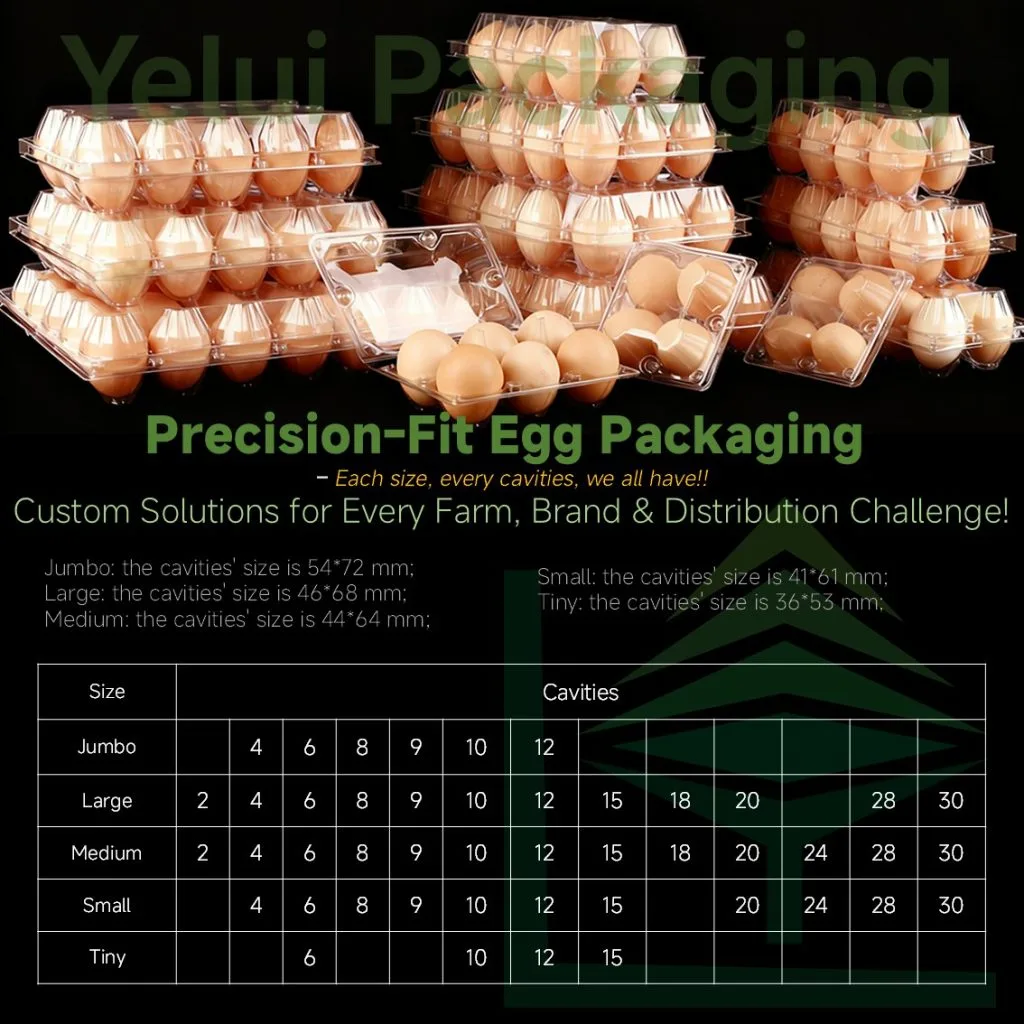
- A cavity fit tolerance: the shell size the cell is designed for, and the egg weight range it must hold without play.
- A drop height and sequence, referenced to ASTM D5276 or a named ISTA procedure, with the pass criterion set in advance.
- A conditioning step: the temperature and humidity the samples sit in before testing.
- An acceptable breakage rate per container, with a remedy clause, so an agreed number replaces an argument after the fact.
The first two items start with product data. Every tray in our range, from the L30 30 egg tray down to the smallest count packs, is listed with cavity dimensions and carton quantity, which is the raw material for a written specification.
Quick answers
What breakage rate should a buyer accept for a container of eggs?
Commercial buyers commonly work to under 1 percent on Grade A shell eggs for a well handled short haul, and to a band of 1 to 2 percent on export shipments. The remedy matters more than the target, because breakage inside the agreed band is a normal cost and breakage above it is a claim.
Does a thicker sheet always make a tray more protective?
No. Thickness raises stiffness, which helps against compression, but a stiffer tray transmits more shock to the shell if the geometry does not spread the contact area. Vibration performance depends mainly on how the egg is seated. Ask for stack load and cavity fit before the gauge is discussed.
How can an importer test a tray before placing a bulk order?
Ask for a sample made in production material rather than a hand sample, and for the data behind it: drop height with the pass result, compression load, and the cavity drawing with tolerances. If a supplier cannot produce those three items, the tray is being sold on appearance. Our answers on sampling, tooling and order flow cover a normal sampling cycle.
Trays cost pennies and breakage costs multiples of that, which is why the second number deserves more attention than the first. Protection is fixed by the drawing: cavity radius, wall support, lid clearance and closure. Only the drawing can be tested, and only a written specification can be enforced. Importers who want the wider picture can read how carton geometry sets landed cost and how clear PET trays fit the European rules, then send us a destination market, an egg size and a target breakage rate.
Grace Lin writes about egg packaging performance and quality control for the Yelui Packaging team.