
Most first inquiries from overseas egg brands look similar: a photo of an egg, a monthly volume, and a request for a price list. Price matters, of course. Yet the buyers who build stable supply relationships are the ones who ask about five less glamorous things first: minimum order quantity, sampling, quality proof, payment terms and shipping. This guide walks through each one from the factory side of the table, using real numbers from our clear PET egg tray production in Dongguan, so you can plan a first order without surprises.
Minimum order quantity: ask what sits behind the number
Factories do not set MOQ to annoy small buyers. Resin arrives in minimum batch sizes, forming machines need a setup run, and a production slot once scheduled cannot be resold. Behind every MOQ sits a question that matters more: does the quote come from an existing mold, or from tooling that has to be cut for you?
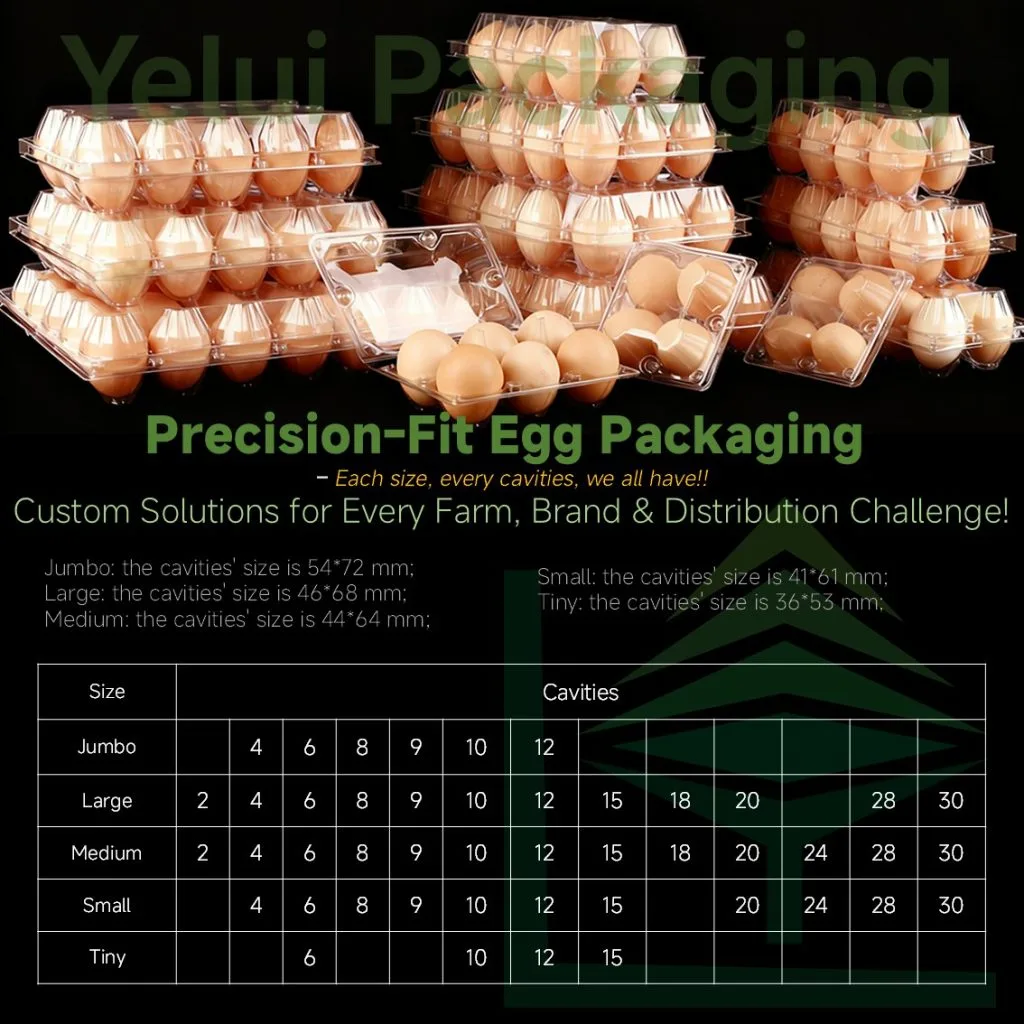
Stocked designs are the easy case. Common cavity counts for chicken and quail eggs, such as 6, 12, 18 and 30, already exist in most factories. Our stocked SKUs start at 3 cartons, roughly 3,600 pieces for a 12 cavity quail model such as the Q12 quail egg tray, and dispatch in 1 to 2 weeks. Custom cavity shapes are different: a new mold usually carries a 10,000 piece minimum and a 3 to 4 week production window. When a supplier quotes a very low minimum on a custom design, ask whether the tooling is already on their shelf. If it is not, either the number or the lead time will move.
Sampling: free for stock designs, real money for new molds
Samples of stocked trays are almost always free; you pay only the courier. Confirm the sample comes from the same mold that will run your production, because a hand finished sample can look better than bulk goods ever will.
A custom cavity is a different product entirely. Someone has to engineer the mold, machine it and test it. Industry lead times for a standard blister mold run about 1 to 2 weeks, and mold charges for a typical egg tray fall between one hundred and several hundred US dollars depending on size and complexity. That money buys more than plastic: a correct mold holds cavity fit through years of repeat orders.
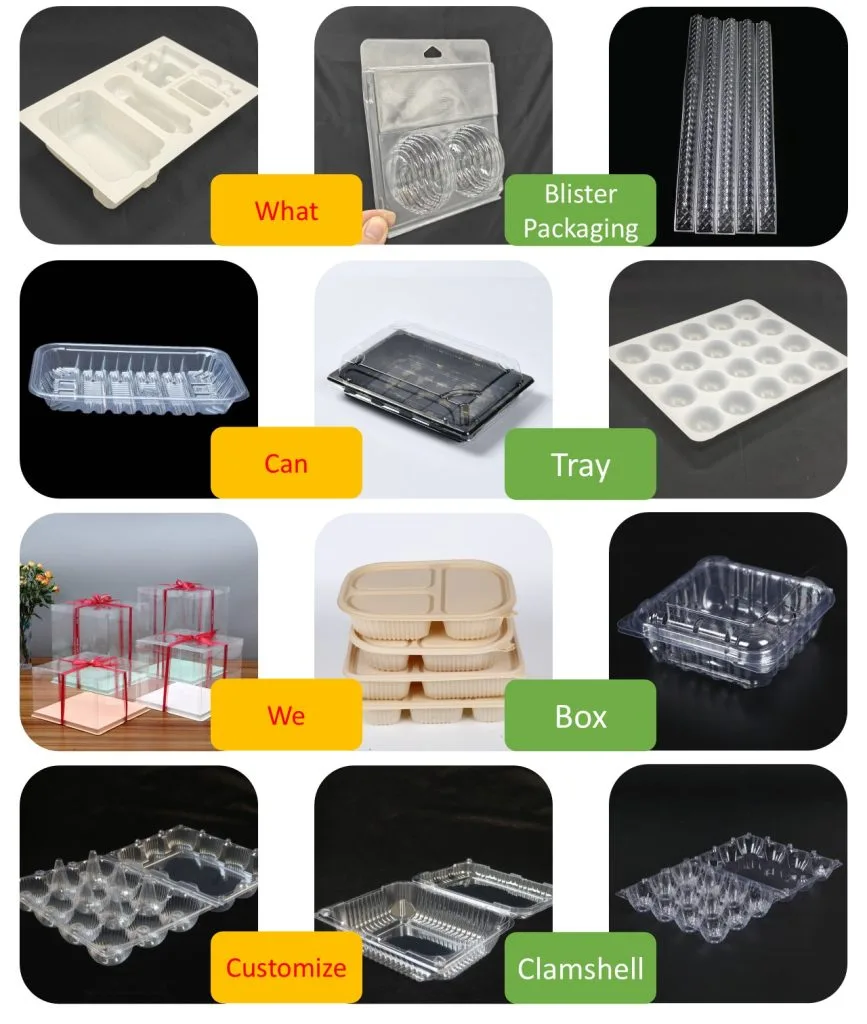
Whichever route you take, pack the samples with your own eggs before you approve anything. Egg weight varies by breed and by market. A tray that fits a 60 gram egg will crack a 70 gram one, and quail sizes vary even more. If you want to understand what happens between resin and finished tray, our guide to blister packaging explains the whole thermoforming process.
Quality proof: documents, load tests and a look at the floor
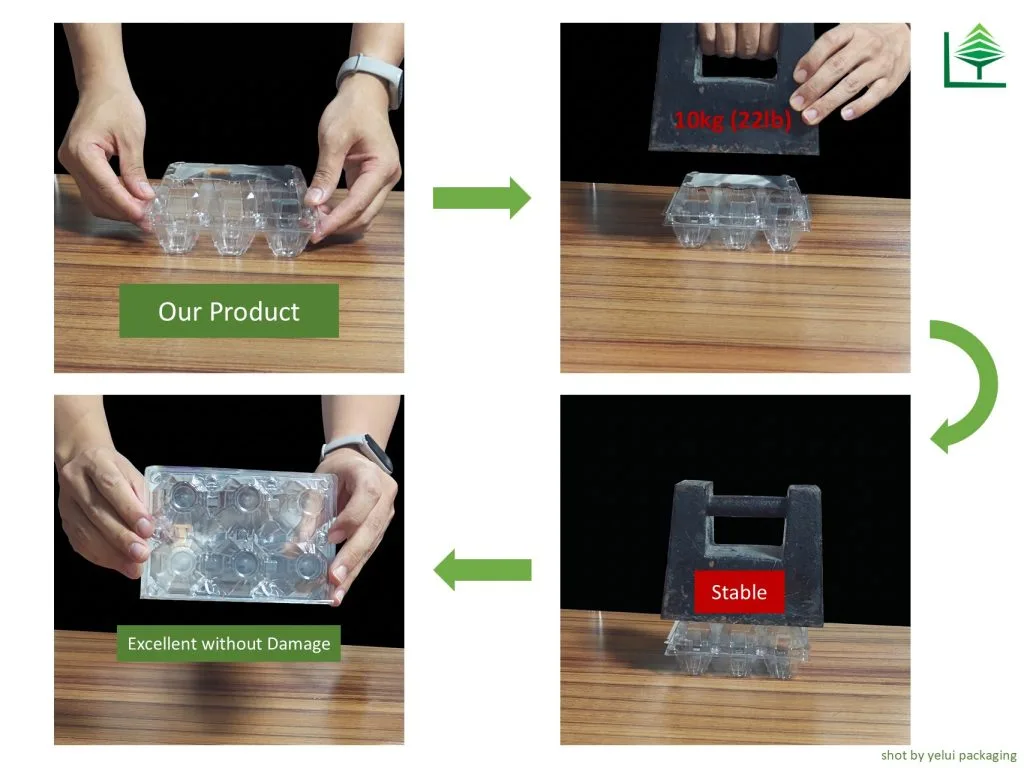
Three things separate a professional supplier from a trader with a catalog. First, food contact documents. Ask for declarations under FDA rules and EU food contact regulation 1935/2004 before you place a purchase order, not after. Second, mechanical evidence. Eggs are heavy for their size and cartons stack high in a container, so ask how the supplier tests stacking strength and ask for the numbers. We load a single 6 cavity quail tray with 10 kg and publish the result, because a claim without a test is just marketing.
Third, eyes on the factory. A video call walkthrough of the forming line, packing area and warehouse costs nothing and reveals a lot. For larger orders, a third party inspection costs roughly USD 200 to 300 per visit and should be written into the purchase order as a condition for releasing the final payment.
Payment terms: why 30/70 became the standard
The dominant structure in China trade is a telegraphic transfer split 30/70: a 30 percent deposit when the order is confirmed, and the 70 percent balance when goods are ready. Factories use the deposit to buy resin and book machine time; the balance protects both sides because it stays in your hands until production actually exists.
Two variations are worth negotiating. Paying the balance against a copy of the bill of lading is safer than paying before shipment, because it means your goods are already on a vessel. A letter of credit makes sense for large orders where documentary security is worth the bank fees.
Whatever you agree, three rules keep first orders safe: keep the deposit at or below 30 percent with a new supplier, never pay through a personal bank account, and confirm the account details by phone before each transfer, because payment interception fraud exists. Treat a request for full payment upfront on a first order as a warning sign; that structure removes all your leverage.
Shipping: nestable trays are cheap to move, if you plan the calendar
Clear PET trays nest into each other, so a carton holds hundreds of pieces and sea freight costs very little per tray. The ocean leg is what you must plan around. Recent lane averages run roughly 2 to 3 weeks from China to the US West Coast, 4 to 6 weeks to the US East Coast, and about 4 to 5 weeks to North Europe, before port handling and inland delivery. Door to door, a realistic planning window from deposit to warehouse is 5 to 8 weeks on full orders.
Two calendar traps catch new importers every year. Peak season from August to October stretches port times, and Chinese New Year closes factories and ports for around two weeks with a slow recovery after. Place orders for spring retail well before January.
Trade terms matter here too. Under EXW you collect from the factory gate. FOB means the factory delivers goods cleared and loaded onto the vessel at a Chinese port, and you pay the main freight. CIF adds freight and insurance to your port. Most egg packaging buyers settle on FOB with their own forwarder.
Quick answers
What is a realistic MOQ for wholesale egg trays?
For stocked designs, low: our chicken and quail trays start at 3 cartons, about 3,600 pieces for a 12 cavity model. Fully custom cavities usually start at 10,000 pieces because a new mold has to be paid for. Always ask whether a quoted MOQ refers to stock tooling or new tooling. More answers sit in our blister and egg packaging FAQ.
How long does a custom egg tray mold take?
Plan on 1 to 2 weeks for a standard egg tray mold, then 3 to 4 weeks of production once samples are approved. Suppliers promising custom tooling in a few days are either reusing an existing mold or skipping the sample stage, and both show up later as cavity fit problems.
Which payment terms are standard for a first order from China?
A 30 percent deposit by bank transfer with the 70 percent balance before shipment, or better, against a copy of the bill of lading. Letters of credit suit large orders. Keep deposits at or below 30 percent with a new supplier and never send full payment upfront.
A first order is less about the perfect price and more about a supplier who answers the unglamorous questions with numbers. Browse the full product catalog, or send an inquiry with your egg size, your market and your deadline. We will send samples of stocked trays in days and quote tooling honestly if your cavity needs one.
Kevin Zhao covers export operations and trade practice for the Yelui Packaging team.