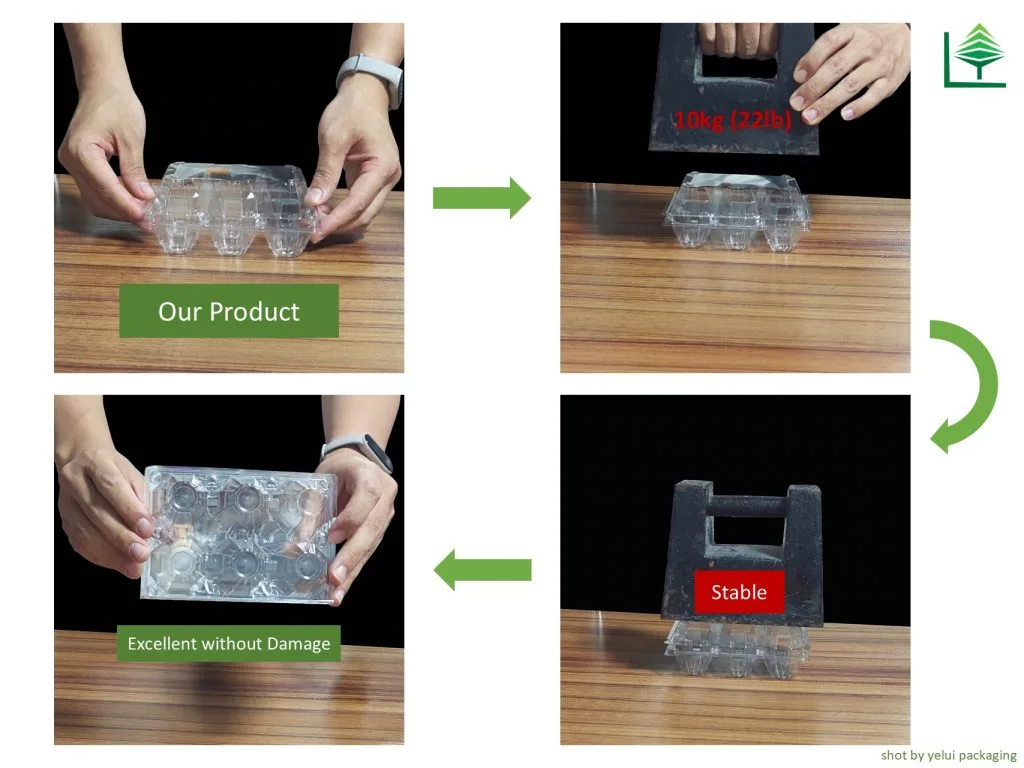
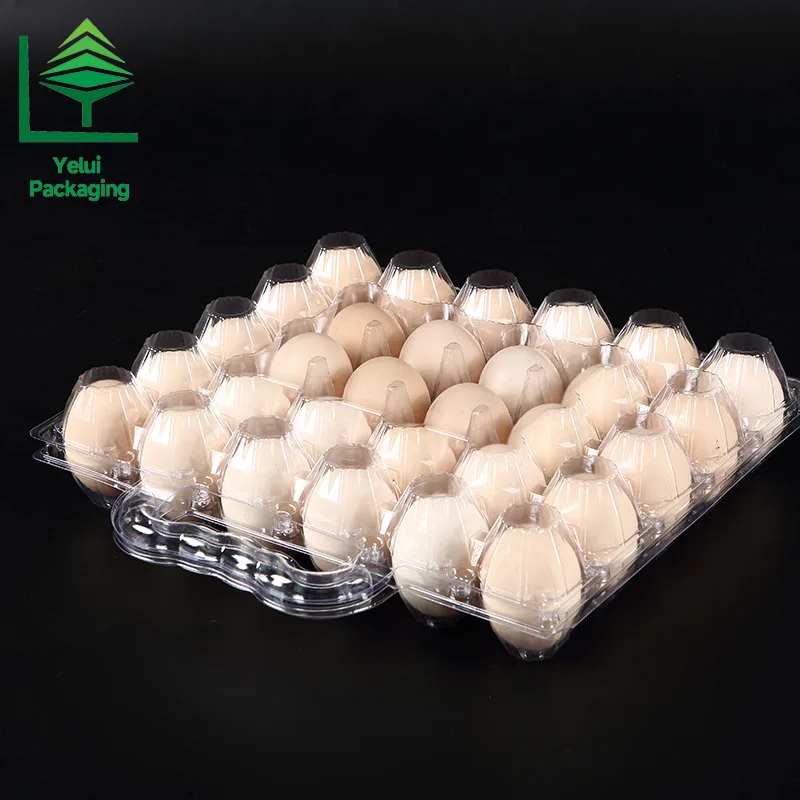
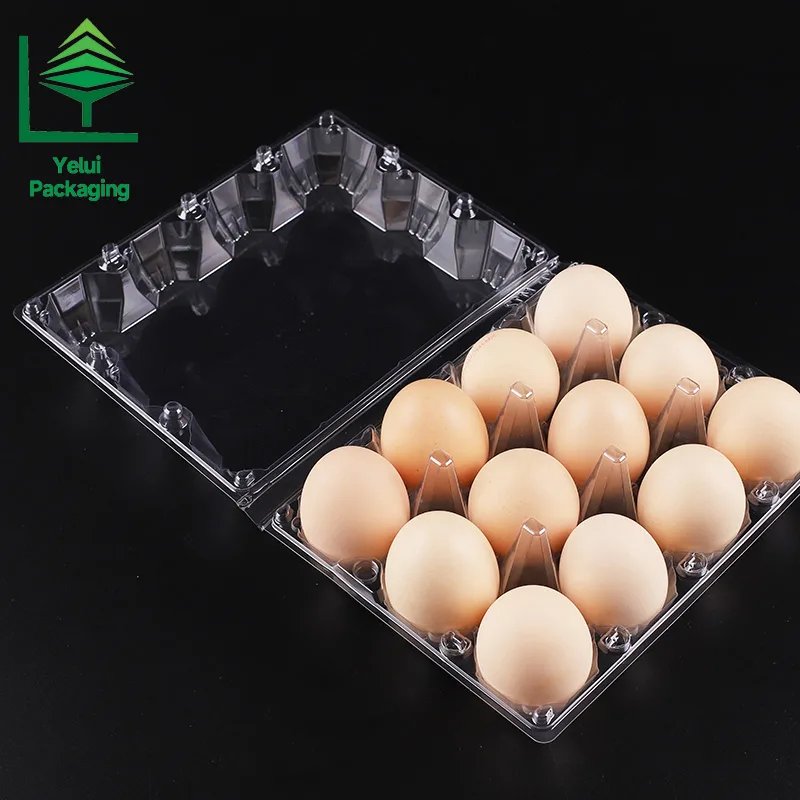
Put two dozen eggs on a shelf, one pack in a clear PET tray and one in an opaque carton, and most shoppers reach for the pack they can see into. It also raises a question buyers ask us regularly: if light damages food, is a clear tray quietly harming the eggs it is showing off? For a shell egg under normal retail conditions the risk is small. The physics is real, though, and knowing where it applies is what lets you specify the right sheet.
What light actually does to food
Light damage in food is mostly a story about one molecule. Riboflavin, vitamin B2, is the photosensitizer food scientists reach for first: it absorbs light energy and passes it on as reactive oxygen, which then attacks fats, proteins and other vitamins. Eggs are listed alongside milk, nuts and whole grains as foods that contain it.
The wavelengths that matter sit in the blue to green part of the visible spectrum, roughly 350 to 560 nanometres, with the strongest effect reported between 400 and 520. That is ordinary visible light, not ultraviolet, so the issue appears in a lit chill cabinet and not only in a sunny window.
Why a clear bottle of milk is not a tray of eggs
The dramatic numbers come from liquids. Liquid milk in a transparent container has been reported to lose between 20 and 80 percent of its riboflavin within two hours, depending on intensity, temperature and exposed surface area. Those losses describe a liquid where the photosensitizer and everything it attacks are free to mix.
A shell egg is not that. Its riboflavin sits in the albumen and yolk behind a shell and two membranes, in a system where nothing circulates. The same work notes that riboflavin stays stable in white bread sold in transparent packaging under lit retail conditions, and that solid or semi solid structures such as cheese and butter limit photo oxidation to the surface. An egg sits at the bread end of that scale.
None of this makes the effect zero. It makes it slow, and it makes the exposure conditions rather than the packaging material the dominant variable.
What the tray already blocks, and what it lets through
PET is not a neutral window. Its aromatic backbone absorbs all ultraviolet below about 320 nanometres, so a clear PET tray screens out UVB and UVC with no additive at all. In the visible range it transmits most of what reaches it, commonly quoted at 80 to 90 percent, which is why it is chosen for display packaging.
That leaves a gap: the band from roughly 320 to 450 nanometres passes through PET and overlaps the lower end of the riboflavin action spectrum. Closing it is an additive decision, not a material change. UV absorbers compounded into the sheet cut transmission in that band sharply while the tray still reads as clear, and the same approach works for egg trays.
Where the real exposure comes from
For most egg programmes the light that matters is not the ceiling light. Supermarket lighting typically runs at 300 to 500 lux in general aisles, 500 to 750 lux on a packaged goods shelf face and up to about 1,000 lux on promotional displays; chilled cabinets add 300 to 800 lux of their own. Daylight beside a window is several times higher.
The regulatory framing points the same way. Regulation (EC) No 853/2004 requires eggs to be kept clean, dry, free of extraneous odour, protected from shocks and out of direct sunshine, and Regulation (EC) No 589/2008 requires packs to protect them from extraneous odour and quality deterioration. Both target direct sun, not chilled aisle lighting. Guidance on the same framework asks for storage out of direct sunlight at roughly 5 to 17 °C, with the date of minimum durability fixed at no more than 28 days after laying.
The hierarchy that follows is simple: out of direct sun, cool, dry. A clear tray on a supermarket shelf sits well inside it.
What transparency is actually worth
A good deal. A shopper can count the eggs, check every shell for cracks and confirm the size without opening the pack, so fewer packs get opened in the aisle and fewer cracked eggs written off, and the pack itself looks confident about what is inside it.
When a tinted or UV stabilized sheet earns its cost
Four situations justify asking for more than standard clear.
- Open air markets and pavement displays. The pack sits in direct sun for hours, exactly what the regulations warn about.
- Window displays and feature stacks. Promotional lighting is the brightest in the store and aimed straight at the product.
- Long ambient distribution chains. Where eggs are not chilled from packing to sale, the pack may sit under warehouse lighting for days.
- Nutrition led or premium positioning. If the brand claims vitamin content, the packaging should be specified to defend it.
In each case the fix need not be a color change. A UV absorbing additive keeps the tray clear; a tinted sheet costs less in additive terms but changes how the eggs look. A printed sleeve or band over the lid gives shade where the light lands and leaves the rest of the tray, and the tooling, untouched.
What to put in the specification
Five lines turn this from a discussion into a purchase order.
- The transmission requirement. Write it as a wavelength band and a maximum percentage, for example a stated maximum between 290 and 450 nanometres, measured on the formed tray.
- The additive and its food contact status. Any UV absorber must be authorized for food contact in the target market, which means checking the positive lists under Regulation (EU) No 10/2011 or the applicable US Food and Drug Administration citations, and getting the declaration in writing.
- The display conditions you are designing for, whether chilled shelf, ambient shelf, open air market or promotional stack.
- A shelf life trial under those conditions, with a tasting panel at the end rather than a laboratory reading alone.
- What happens at end of life. Some tints and additives complicate recycling streams, and that is cheaper to answer before launch.
It is the same discipline we recommend when comparing clear PET with molded pulp, and when working through the airflow and condensation questions in our article on how egg packaging affects shelf life: name the variable, put a number on it, test the formed pack.
Quick answers
Does a clear egg tray let damaging light reach the eggs?
Yes, some. PET blocks ultraviolet below about 320 nanometres by itself but passes most visible light and part of the near ultraviolet. For a shell egg on a chilled shelf the effect is small: a solid system behind a shell, and low light levels. Ask for a UV absorbing sheet if the pack will sit in direct sun.
Should I switch to an opaque or tinted tray to protect egg quality?
Only if the eggs will genuinely be exposed. Opaque packaging solves a problem most chilled retail programmes do not have, and gives up the inspection advantage that sells clear trays. A sleeve or band over the lid shades the pack at the display point and leaves the tray transparent.
How do I check whether a sheet really blocks UV?
Ask for transmission spectra measured on the formed tray rather than the flat sheet, because forming thins the walls and thinner walls transmit more. Then confirm the additive is authorized for food contact in your market and run a shelf life trial with a tasting panel.
Clarity is a selling feature, and like any packaging feature it belongs in the specification with a number attached. Decide what light your eggs will meet, state the transmission you need, and confirm it on a formed tray. Our page on what blister packaging is covers the material basics, and the product range shows the formats we tool as standard.
Grace Lin writes about packaging materials and retail packaging for the Yelui Packaging team.